
The short answer
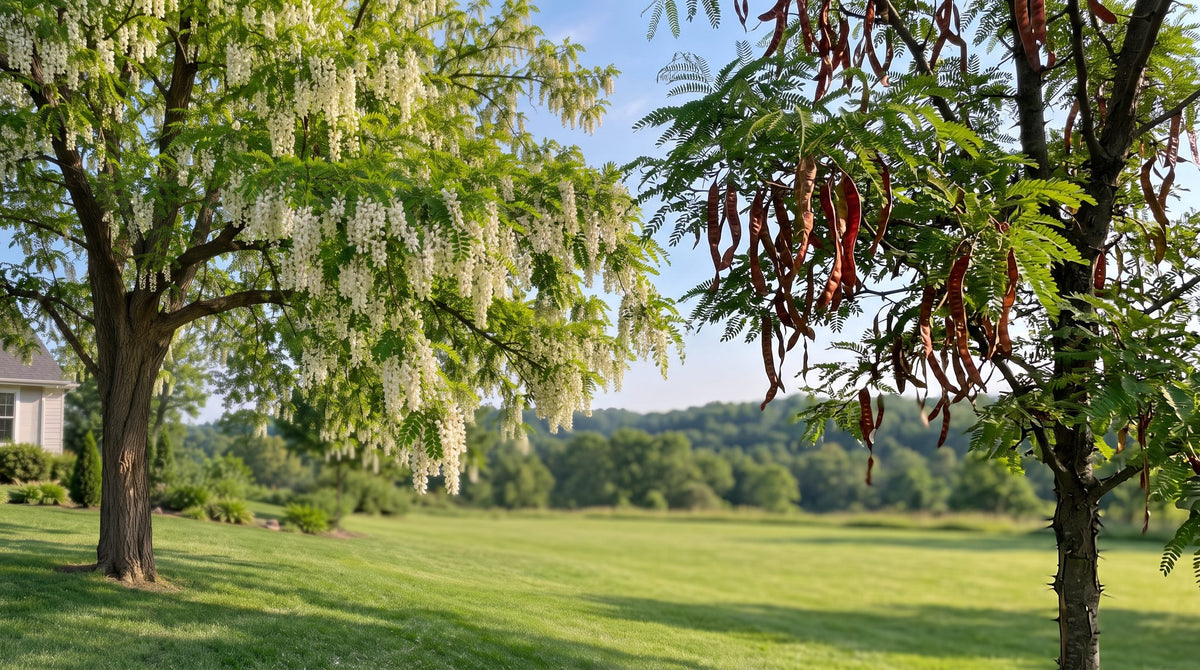
Honey locust carries long, branched thorns on its trunk and branches, tiny fern-like leaflets and long twisted pods. Black locust has short paired spines at each leaf, larger oval leaflets and hanging clusters of fragrant white flowers in late spring. Plant honey locust for light shade and wildlife food, black locust for poor soil and bees.
Black locust vs honey locust: the two trees share a common name, a place in the legume family and a home in North American woodlands. Both carry compound leaves, and both can grow thorns. Yet they sit in different genera: honey locust is Gleditsia triacanthos and black locust is Robinia pseudoacacia. Up close, though, they are easy to tell apart once you know where to look, and each one brings something different to a yard. One is a long-lived shade tree with sweet pods for wildlife; the other is a quick, tough tree that feeds bees and improves thin ground. We grow both at our Tennessee nursery, as single trees and as bulk seedling packs. Below are five checks to tell them apart in the field, a guide to which tree suits which site, a side-by-side table of every feature and a planting routine for bare-root stock.
Black locust vs honey locust trees
1. Check the thorns first
Thorns are the fastest clue. A wild honey locust grows long, stiff thorns that often branch into clusters, and they appear on the trunk as well as the branches. Black locust carries only short spines, set in pairs where each leaf meets the twig, and older trunks usually show none at all. Thornless honey locust cultivars exist for street and lawn planting, so a smooth trunk alone does not settle it.
Tip: Our honey locust trees are the native, thorny form, so wear gloves when you plant them.
2. Look closely at the leaflets
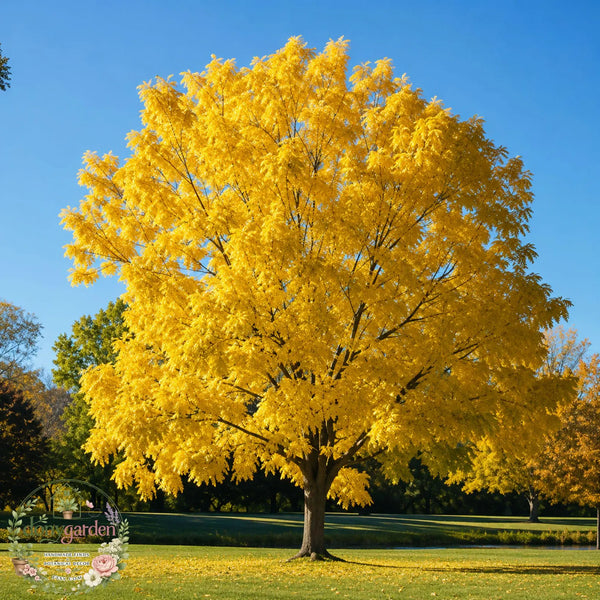
Honey locust leaves are made of many tiny leaflets, often doubly compound, which gives the tree a fine, fern-like look and an airy canopy that lets dappled sunlight through. Black locust leaflets are noticeably larger and oval, and each leaf ends in a single leaflet at the tip, while a honey locust leaf ends in a pair. Both turn yellow in fall, so check the leaves in summer.
3. Watch for flowers in late spring
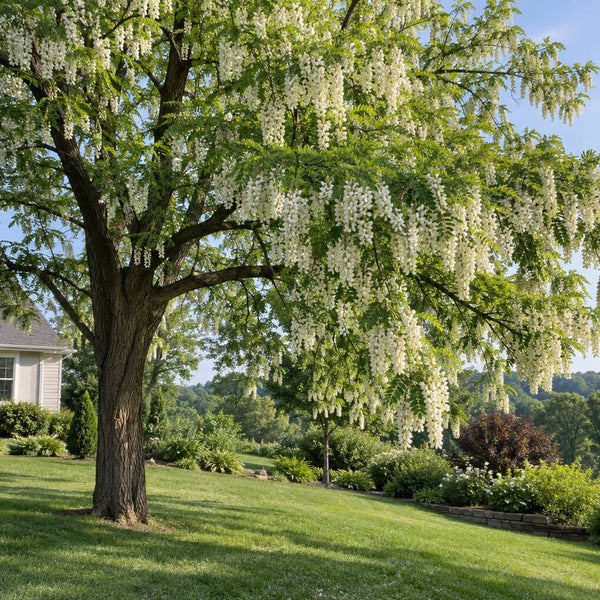
Black locust is the showy one. In late spring it hangs long clusters of fragrant white flowers that draw native bees and honeybees. Honey locust flowers are small, greenish and easy to miss, though pollinators still visit them. Black locust is also a legume that fixes nitrogen through bacteria in its root nodules, so it builds fertility in worn or disturbed ground as it grows.
Tip: Flowers settle it for a few weeks each spring; the rest of the year, use thorns and pods.
4. Compare the seed pods
Honey locust pods are long, flat and often twisted. Inside, a sweet, honey-flavored pulp surrounds the seeds, which is where the tree gets its name. Turkeys, deer, raccoons and squirrels feed on them. Black locust pods are much shorter, thin and flat. If the ground under the tree is scattered with long, curling brown pods, you are looking at a honey locust.
5. Read the bark on older trees
Mature black locust bark is deeply furrowed into thick, interlacing ridges that look almost like braided rope. Honey locust bark is darker and smoother, with shallower ridges, and on wild trees thorn clusters often grow straight from the trunk. On a young tree the bark is less distinct, so use it to confirm what the thorns and leaflets already told you.
Which locust to plant where
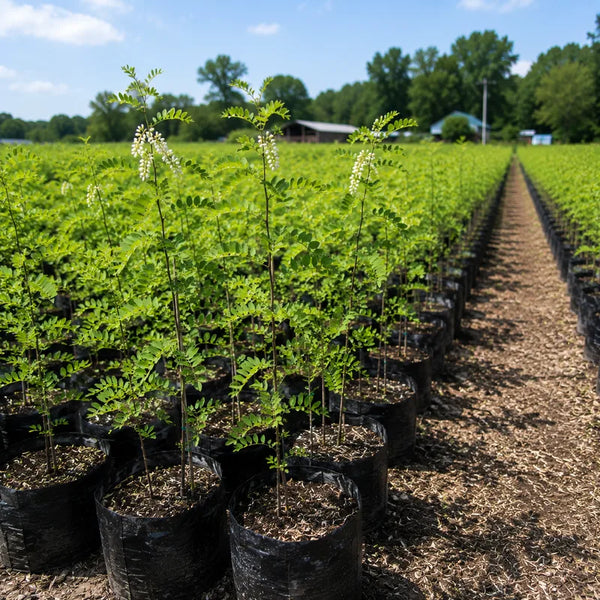
Choose honey locust when you want a long-lived shade tree. It can live over 100 years and grow to around 80 feet, and its fine leaves let dappled light reach the lawn and beds below. It does well in urban soils, clay and polluted sites, suits windbreaks and erosion control, and its sweet pods feed wildlife. Choose black locust when you want fast results on tough ground. It grows 2 to 4 feet a year when young, thrives in sand, gravel, clay loam or rocky soil in USDA Zones 3 to 8, and needs no fertilizer because it makes its own nitrogen. Give it full sun and well-drained ground. Its spreading roots bind slopes and banks, its flowers feed bees, and its dense heartwood is prized for fence posts. For one yard tree, start with one of our larger trees; for a hedgerow, windbreak or woodlot, our seedling packs plant a whole row at one height.
Care and keeping
Plant bare-root locusts while they are dormant, from November to April when the ground is workable. Soak the roots for an hour or two, spread them in a wide hole and set the root collar at soil level. Firm the soil, water well, then water weekly through the first season when rain is short.
Frequently asked questions
How do you tell black locust from honey locust?
Start with the thorns and leaves. Honey locust has long, branched thorns on its trunk and branches and tiny, fern-like leaflets. Black locust has short paired spines at the leaf bases and larger oval leaflets. In late spring, only black locust hangs heavy clusters of fragrant white flowers, and only honey locust grows long, twisted pods.
How poisonous is black locust?
Black locust should be treated as a poisonous tree. According to Poison Control, its bark, seeds and leaves contain poisonous compounds called toxalbumins, which are toxic to both livestock and humans. Site it away from grazing animals, and keep children from chewing the bark or seeds.
Can you burn black locust for firewood?
Yes. Black locust heartwood is dense and naturally rot-resistant, and it is prized for both firewood and fence posts. Because the tree grows 2 to 4 feet a year when young, a woodlot of seedlings can supply posts and fuel wood over time. Honey locust also has strong, durable wood.
Side-by-side table: thorns, leaves, pods, bark and size
| Feature | Honey locust | Black locust |
|---|---|---|
| Botanical name | Gleditsia triacanthos | Robinia pseudoacacia |
| Thorns | Long, branched, on trunk and branches | Short, paired at the leaf bases |
| Leaflets | Tiny, fern-like, often doubly compound; leaf ends in a pair | Larger and oval; leaf ends in a single leaflet |
| Flowers | Small and greenish | Fragrant white hanging clusters in late spring |
| Pods | Long, flat, twisted, with sweet pulp | Short, thin and flat |
| Bark | Darker and smoother | Deeply furrowed, rope-like ridges |
| Mature size | Around 80 feet tall | 30 to 50 feet tall, 20 to 35 feet wide |
| Growth rate | About 2 feet a year in good conditions | 2 to 4 feet a year when young |
| Best for | Light shade, urban and clay soils, wildlife food | Poor dry soil, bees, erosion control, posts |
Honey locust
- Botanical name
- Gleditsia triacanthos
- Thorns
- Long, branched, on trunk and branches
- Leaflets
- Tiny, fern-like, often doubly compound; leaf ends in a pair
- Flowers
- Small and greenish
- Pods
- Long, flat, twisted, with sweet pulp
- Bark
- Darker and smoother
- Mature size
- Around 80 feet tall
- Growth rate
- About 2 feet a year in good conditions
- Best for
- Light shade, urban and clay soils, wildlife food
Black locust
- Botanical name
- Robinia pseudoacacia
- Thorns
- Short, paired at the leaf bases
- Leaflets
- Larger and oval; leaf ends in a single leaflet
- Flowers
- Fragrant white hanging clusters in late spring
- Pods
- Short, thin and flat
- Bark
- Deeply furrowed, rope-like ridges
- Mature size
- 30 to 50 feet tall, 20 to 35 feet wide
- Growth rate
- 2 to 4 feet a year when young
- Best for
- Poor dry soil, bees, erosion control, posts
Planting either locust from bare-root seedlings
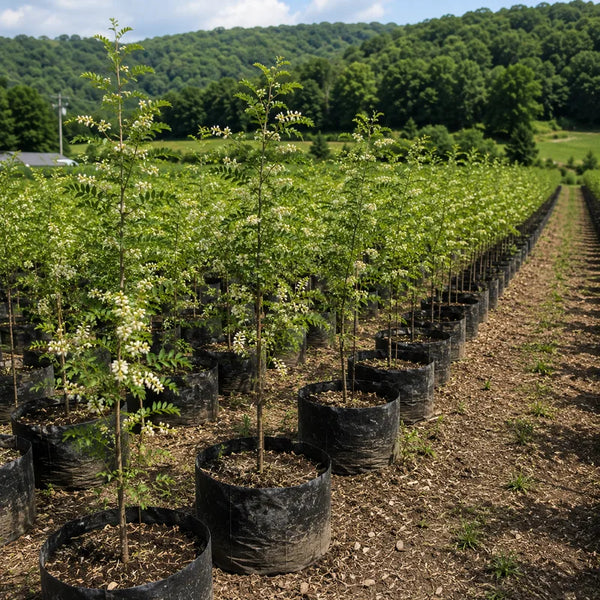
Our black locust ships bare root while dormant, from November 15 to April 15. Give a single black locust open, sunny ground with room for a mature spread of 20 to 35 feet. For a windbreak or hedgerow, set seedlings close together in rows, and keep those rows outside pasture fences for the reason given in the FAQ above. Honey locust seedlings suit specimen trees, hedges, property lines and large naturalized plantings. Whichever you plant, keep grass and weeds cleared in a circle around each seedling for the first two summers so it gets all the water. After the first season, water only in a long drought. Prune in late winter to remove crossing branches or to train a single trunk.