
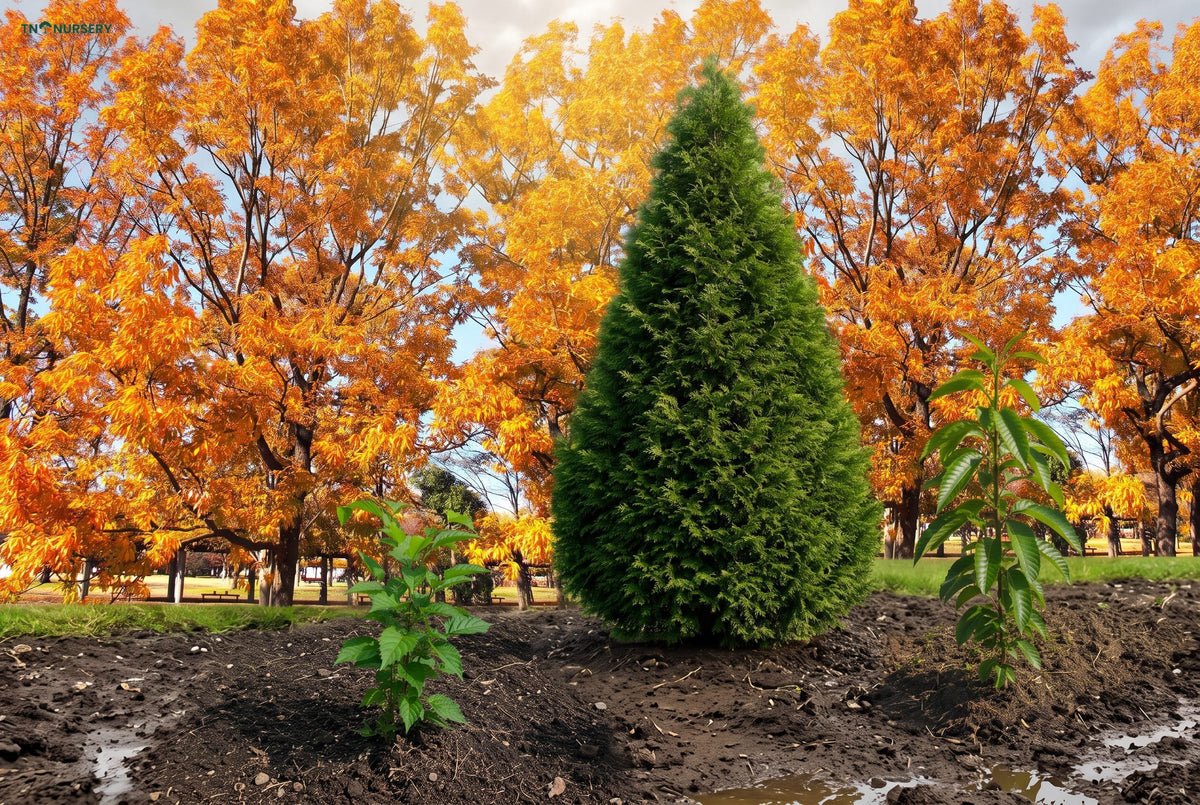
Fall Trees for Clay and Poor Drainage
Match your tree to dense, slow-draining ground. Our guide helps you plant for lasting roots this fall.
How to choose the right trees for clay and poor drainage?
- Test drainage before choosing a planting location
- Match mature tree size to your yard and overhead space
- Set the root flare at soil level, then mulch around the planting area
- Separate heavier-soil picks from trees needing improved drainage
Prepare Clay Soil Before You Plant
For trees for clay and poor drainage, start with a hard look at your yard after rain. Mark puddles that remain after 24 hours. Those spots need a different plan than soil that simply feels sticky.
How to choose the right trees for clay and poor drainage?
Dig a test hole about 12 inches deep and fill it with water. Let it drain, then fill it again. If water remains the next day, treat the site as consistently saturated rather than ordinary clay.
Ordinary clay drains slowly but improves across a wide bed. Compacted soil resists a shovel and often sits near paths or new construction. A low spot collects runoff. Saturated ground stays wet even during dry spells.
Improve the ground, not just the hole
Loosen a broad area around the planting site where the soil is compacted. Spread compost for clay soil across the surface and work it into the top few inches over time. Compost helps soil form crumbs, but it cannot fix a low spot that collects water.
Do not add gravel to the bottom of a planting hole. It can hold water above the gravel line. Species needing well-draining soil for plants need a site that drains beyond the root ball.
Plant high in heavy soil: Find the root flare, keep it visible, and set it slightly above grade so settling does not bury the trunk.
Our seven picks, grouped by yard role
- Large shade: two selections for broad canopies and long-term summer cover.
- Wet-site tolerance: two selections for ground that stays moist longer after storms.
- Landscape presence: two ornamental trees, including choices suited to smaller planting spaces.
- Evergreen screening: one upright choice for year-round privacy.
Keep in mind that small trees for landscaping still need their root flares above soggy soil. For ground that never drains, choose the wet-site group rather than forcing a dry-ground tree into a puddling area.
Plan Beyond Small Trees for Clay Soil
These trees for clay and poor drainage serve different long-term roles. Chinese chestnut seedlings need full sun and well-drained soil in zones 4–8. Keep in mind, compost for clay soil improves a planting bed but cannot fix standing water.Saw Tooth Oak seedlings provide substantial full-sun shade…


A Future Shade Tree for Clay Soil

Saw Tooth Oak for Trees for Clay and Poor Drainage
For larger landscapes, our Saw Tooth Oak seedling for long-term shade develops a broad crown, balanced form, and finely serrated green foliage. Fall brings warm gold, bronze, and brown tones, while abundant acorns support birds and squirrels. Plant it where water drains after rain, not where clay stays waterlogged; compost for clay soil can help improve the planting area. Keep in mind, this is not one of our small trees. It matures over 25 feet tall and needs room to become a statement tree.
- Fast-growing shade tree that matures over 25 feet tall
- Produces abundant acorns for birds, squirrels, and other wildlife
- Best for large lawns, property edges, parks, naturalized areas, and decades of shade planning
When Small Trees Won’t Do
For trees for clay and poor drainage, mature scale and drainage needs matter. These three choices give larger yards a productive hardwood, broad native shade, or evergreen screening.
Fall Planting Checklist for Heavy Clay
For trees for clay and poor drainage, careful planting prevents many early setbacks. Clay holds moisture around roots for days, so set the tree high and water with patience.
How to choose the right trees for clay and poor drainage?
Start by checking the site after rain. If water remains for more than a day, reroute runoff or plant on a raised berm. Persistent pooling may also call for a more wet-tolerant tree.
Planting steps for small trees
- Inspect the root ball. Loosen circling roots and remove any packing material.
- Dig a hole two to three times wider than the root system. Keep it no deeper than the root ball.
- Set the root flare slightly above surrounding grade. This placement helps oxygen reach roots in dense clay.
- Backfill with the native soil. Do not create a soft pocket with compost for clay soil at planting.
- Water slowly until moisture reaches the full root zone. Then check the soil before watering again.
Keep in mind: Clay dries slowly below the surface. A weekly watering habit can leave roots sitting in excess moisture.
Mulch and early protection
Spread mulch in a broad ring, 2 to 3 inches deep. Keep it several inches away from the trunk, and add a visible guard so mower decks and string trimmers cannot scar young bark. Skip heavy fertilizer during planting.
Build around the tree with layered groundcover, mosses, shrubs, seeds, and live stakes where your site allows. Ornamental trees and small trees for landscaping gain a more finished setting when lower plants cover bare soil and slow runoff.
Frequently Asked Questions
What are the best trees for clay and poor drainage to buy?
Many trees for clay and poor drainage can grow well when you match the species to your site. Choose trees suited to your growing zone, avoid low spots with standing water, and plant the root flare above the surrounding grade.Our Saw Tooth Oak, Chinese Chestnut, American Elm, and Green Giant Arborvitae give homeowners several tree types to assess for their landscape plan.
Should I add sand to clay soil?
Usually, no. Mixing a small amount of sand into clay can create a dense, cement-like texture instead of improving drainage.Use compost for clay soil instead, then spread it across the planting area and work it into the upper soil layer. For severe wet areas, change the grade or install drainage routes to move excess water.
How deep should I plant a tree in heavy soil?
Find the root flare first. It is the point where the trunk widens into the top roots.Set that flare at soil level or slightly above it, especially where clay settles after rain. Planting too deeply keeps oxygen away from roots and can slow establishment.
Does compost fix poor drainage?
Compost improves soil structure over time. It helps clay form crumbly aggregates that allow more air and water movement around roots.But compost cannot solve a site that holds standing water for days. When planning how to improve soil drainage, address slope, compacted layers, and water flow before planting.
How much mulch does a newly planted tree need?
Apply a 2- to 3-inch mulch layer over the root zone. Keep mulch several inches away from the trunk, so the bark stays dry.Mulch slows moisture loss and reduces weed competition. Keep in mind that thick mulch can trap excess moisture in already-heavy soil.
How long does TN Nursery shipping take?
We ship all items through 3-4 day ground shipping. Plan your planting date around delivery, so you can unpack and plant promptly when your trees arrive.
What if I need help with an order or have a policy question?
Email us at customerservice@tennesseewholesalenursery.com for order help. We do not offer refunds or accept returns.We do not provide a product warranty unless you purchase an extended warranty at the time of order. Tell us your order details and planting concern, and we can help clarify the next step.
Conclusion
Key Takeaways
- Assess puddling and drainage before choosing a planting spot.
- Set the root flare at ground level to avoid buried roots.
- Water fall-planted trees during dry periods until roots settle in.
- Choose trees for their job: shade, privacy, wildlife value, or curb appeal.
- Shop by USDA hardiness zone to support long-term survival.
