
We help you choose productive trees with shade, spring bloom, and harvest value. Find practical picks for your persimmon tree growing zone and long-term landscape success.
Native Fruit Trees That Earn Their Space
- Mature size: check canopy spread and root space before planting near patios, drives, or property lines.
- Sunlight needs: most fruiting trees produce better with full sun, so count daily light before you buy.
- Drainage and soil type: avoid wet spots, and match the tree to your native soil instead of forcing a poor site.
- Maintenance level: think about pruning, fallen fruit, and cleanup if the tree sits near walkways or seating areas.
- USDA hardiness zone: verify your zone first, especially when comparing native options with different cold limits.
How to Choose a Native Fruit Tree That Fits Your Yard
Picking a fruit tree starts with your site, not the catalog photo. If you want red mulberry, for example, give it room, sun, and a spot where dropped fruit will not bother a walkway or patio.
How to choose the right red mulberry?
Start by measuring the planting area and looking up, not just across. A red mulberry can become a broad, useful shade tree, so it works better in an open lawn than in a tight side yard.
Start With Mature Size
Small suburban lots usually need careful placement. We suggest thinking about canopy spread, nearby fences, and how close the tree will sit to driveways, decks, and utility lines.
Larger properties give you more freedom. You can plant one tree as a focal point, or lay out several fruit trees for staggered harvest and layered shade.
- Compact spaces: Choose trees that will not crowd the house or dominate the whole bed.
- Open yards: Use wider canopies where shade, screening, and fruit all matter.
- Shared spaces: Keep messy fruit away from pools, paths, and parked cars.
Match the Tree to Sun Exposure
Full sun usually gives you heavier bloom and better fruit set. But morning sun with good airflow can still work well in many home landscapes, especially if your afternoons run hot.
Know Your Soil and Drainage
Look, this step saves years of frustration. If water sits after rain, fix drainage first or plant in a better spot, because fruit trees hate wet roots more than they dislike average soil.
Types of Persimmons
When comparing types of persimmons, think about use before appearance. Some homeowners want reliable fall harvest, while others want a tidy ornamental tree that still offers seasonal color and edible fruit.
Plan for the Tree's Long-Term Role
Ask one simple question: are you planting for harvest, screening, specimen value, or mixed-use shade? The answer changes everything, from spacing to cleanup to how much fruit you actually want to pick.
We tell customers this every season: the prettiest tree on day one is not always the right tree for year ten.
Keep in mind that spring and summer planting both work, but summer planting needs closer watering during heat. And if you are checking persimmon tree growing zone or deciding how much persimmon fruit you want, you will find our zone-based shopping helpful in the Fruit Trees collection and our Container Plants selection for what is plantable now.
A Productive Tree That Broadens the Home Orchard Beyond Red Mulberry

Chinese Chestnut Seedlings for Shade, Structure, and an Edible Harvest
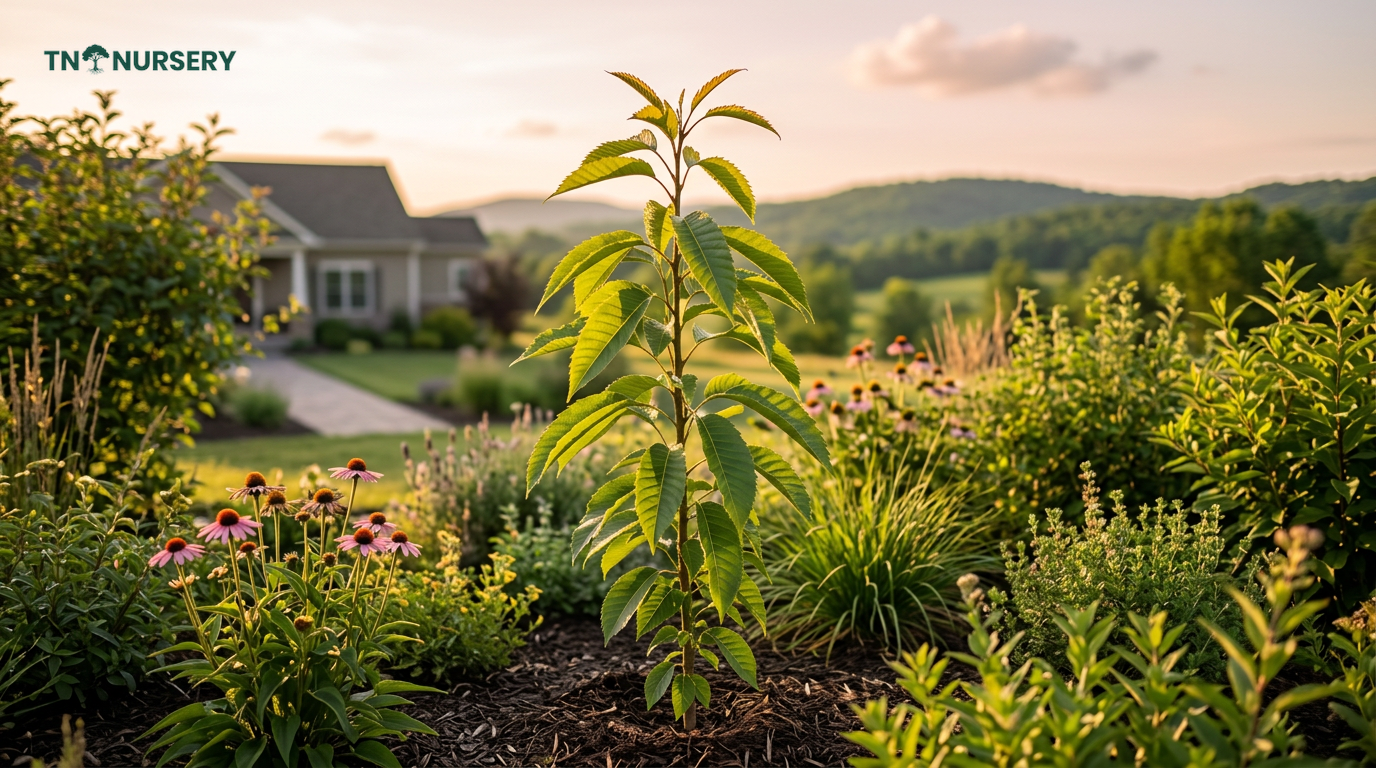
While this guide focuses on native fruit trees, we know many homeowners want a yard that produces more over time. Our Chinese chestnut seedlings add spring foliage, dense summer shade, and golden-bronze fall color, while giving you an edible harvest that can diversify a landscape built around persimmon fruit or other backyard favorites. Keep in mind that this tree matures at over 25 feet, so it needs long-term planning, full sun, and well-drained soil.
- Thrives in full sun with well-drained soil for reliable long-term growth
- Matures at over 25 feet to create broad shade and strong landscape structure
- Hardy in planting zones 4 through 8 for wide persimmon tree growing zone overlap
Where Red Mulberry Fits in a Home Landscape
Red mulberry works best in a yard that has room to relax a little. We place it where its broad crown can cast summer shade, feed birds, and soften a formal layout with a more natural outline. If you want a native edible tree that feels at home near woodland edges or larger backyards, this is the one we point to first.
How to choose the right red mulberry?
Start with space. We suggest thinking about mature height, canopy spread, and how fallen fruit may affect patios, walkways, or parked cars. Keep it well clear of tight foundation beds and property lines, because this tree looks best when you let the branches develop naturally.
Look, site conditions matter here. Red mulberry handles a looser, less formal role better than a clipped front-entry planting. We use it where homeowners want shade overhead and wildlife activity around the edges, not where every branch has to stay neat.
Where we place it most often
- Backyard shade zones: where the canopy can spread without crowding a patio roofline
- Naturalized borders: along fence lines, meadow edges, or larger side yards
- Wildlife-friendly spaces: where songbirds and small mammals can benefit from the fruit
What are the best red mulberry to buy?
For most homeowners, the best fit is the one matched to the whole plan, not just the open hole in the lawn. We think through canopy first, then understory, then the planting beds below so the yard reads as one connected space.
Red mulberry vs. persimmon in practical terms
Here is the plain comparison. Red mulberry gives you a softer canopy effect and a wilder feel, while persimmon fruit usually appeals more when harvest is the main goal. And when you compare types of persimmons, your first filter should be climate, because the right persimmon tree growing zone matters before flavor, size, or use in the kitchen.
Choose the tree for the space it will occupy in ten years, not the pot size you see on planting day.
So, think bigger than one tree. A strong home landscape usually needs canopy, smaller understory layers, and open ground around each planting so every tree can mature without crowding the next.
Build Shade and Structure Around Persimmon Fruit Plantings
When you plan beyond the edible corner, your yard works better year after year. We grouped these native shade trees to support red mulberry and other backyard fruit plantings with canopy, filtered light, moisture tolerance, and long-term site fit.


Frequently Asked Questions
What is a good native fruit tree for a home landscape?
For many homeowners, red mulberry is a strong native pick because it handles naturalized edges, feeds birds, and gives you soft, sweet fruit when ripe. If you want a tidier lawn tree, persimmon is often easier to place because the branching stays more upright. Keep in mind that mulberries can drop fruit, so we suggest planting them away from patios, walks, and parked cars.
How do I know my persimmon tree growing zone?
Start with your USDA hardiness zone, then match it to the tree before planting. Your persimmon tree growing zone matters, but so do drainage, sun, and winter wind. We tell customers to check the coldest winter lows at their address, not just their county. A warm south-facing yard can help, while a low wet spot can hurt even a zone-matched tree.
What should homeowners know about the types of persimmons?
The two types of persimmons most homeowners ask about are American and Asian. American persimmon is the better native fit for many wildlife-friendly landscapes and usually handles regional weather swings with less fuss. Asian persimmon can give larger fruit, but site choice gets more important. So if your goal is a durable backyard tree first, native American persimmon is usually the better call.
Are red mulberry trees good for wildlife-friendly yards?
Yes. Red mulberry supports birds and other wildlife with fruit and cover, which makes it useful along property lines or near wooded edges. But plant it with space. The fruit can stain hard surfaces, and fallen berries may bring extra animal traffic close to the house. If that sounds annoying, place it deeper in the yard where the mess works in your favor.
How far should fruit trees be planted from the house or driveway?
We suggest giving fruit trees enough room for mature spread, root growth, and easy harvest access. For most home landscapes, that means avoiding tight spots right beside foundations, driveways, and septic areas. Look, the fruit matters, but cleanup matters too. Trees with heavier drop, including some persimmon fruit and mulberry crops, are easier to live with when you leave open ground underneath.
When should I plant fruit trees in spring or summer?
Spring is usually the easier planting window for homeowners because roots get time to settle before peak heat. Early summer can still work, but you will need steadier watering and closer attention during hot, dry weeks. We do not suggest waiting for the hottest stretch of the season if you can avoid it.
How does TN Nursery ship live plants?
We ship all items by 3-4 day ground shipping. That shorter transit window helps live plants arrive in better condition than slower methods. When your order comes in, unpack it promptly and water as needed based on the plant type and your local weather.
Does TN Nursery accept returns or offer refunds, and how can I contact you?
We do not accept returns, and we do not offer refunds. We do not offer a warranty unless an extended warranty is purchased at the time of order. If stock is available, we may offer a reshipment. If the product is out, we may offer in-store credit. Need help? Email us at customerservice@tennesseewholesalenursery.com or write to Tennessee Wholesale Nursery, 12847 State Route 108, Altamont TN 37301, United States.
Conclusion
Key Takeaways
- Choose trees based on site conditions, mature size, and long-term use.
- Native fruit trees can provide harvest, shade, habitat, and seasonal interest.
- Persimmon selection should match how you plan to use the fruit and the site.
- Layering fruit trees with other native plantings creates a tougher, more useful landscape.
