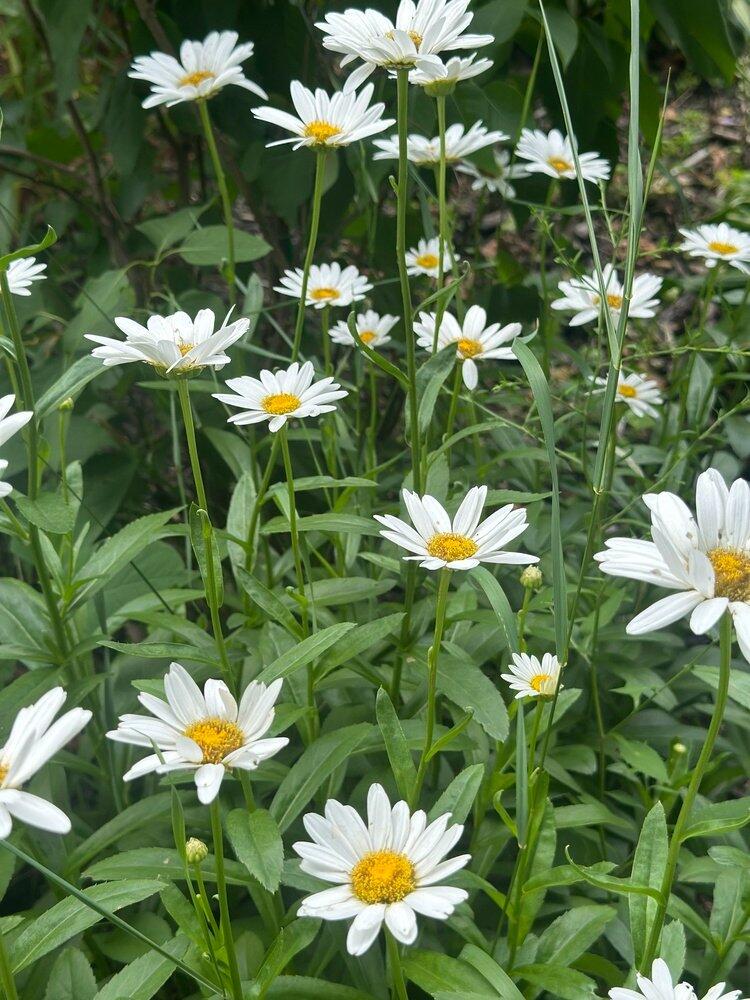
Shasta Daisy Plant Details
Shasta Daisy - Leucanthemum × Superbum
The Shasta daisy perennial is a delicate, hardy, and resilient perennial plant named for Mt. Shasta in California, where the plant was cultivated. Its snow-white petals match Mt. Shasta's snowy peaks. In the 18th and 19th centuries, young girls used to call it the "he loves me, he loves me not" flower. Girls would pick the white petals surrounding the yellow center off: "he loves me" and "he loves me not." By the time the last petal was chosen, fate would tell them if the boy of their dreams loved them.
Aside from folklore, Tammy at TN Nursery enjoys writing about plants with this much character. This is one of her favorite perennials due to the vibrant yellow center and the vibrant white outline of the petals. She states, "It is a super hardy perennial, and we grow thousands to meet the demands we sell so many." They are super easy to grow and a favorite of our customers. It's low maintenance, disease- and pest-resistant, and it never has to be sprayed with herbicides or fungicides, making it a super environmentally friendly perennial of choice.
This flower is commonly found across the United States, despite being native to Europe and temperate regions in Asia. The silky petals and soft yellow center are immediately recognizable and gorgeous at every turn.
Shasta Daisy Plant Details
Family: Asteraceae
Light Requirement: Full Sun, Partial Shade
Water Needs: Low
Height: 1-4 ft
Spread: 1-2 ft
Growth Rate: Moderate - Fast
Soil Preference: Moist, Well-drained, Clay, Loam, Sand
Bloom Time: Summer - Early fall
Flower Color: White
Wildlife Value: Butterflies
Why Choose the Shasta Daisy for Your Garden
The Shasta Daisy is a 21-petaled flower whose thin, white petals have two overlapped rows. The petals are clustered tightly around a fluffy yellow center containing pollen. The narrow, oblong leaves are deep green with toothy edges along the sides.
The wide, eye-catching blooms are common in cut flower gardens and spread just as easily as native daisies despite their non-native status. These flowers can be distinguished from native daisy varieties by their shorter petals and flat, yellow center, ringed with light green.
How to Grow and Care for Shasta Daisy Plants
These sunny, cheerful blossoms are an undemanding plant that can thrive in many climatic areas. The flowers bloom from summer to early fall, and charm any corner of your gardenscape with their lush foliage for the rest of the year.
The Shasta Daisy prefers moist, well-drained soil but is happy in clay, loam, or sandy soil. Its blooms are attractive to butterflies, which help with pollination, and the seeds are dispersed through animals, running water, wind, and even mud carried around on shoes.