Scott Moree
Just received them. Put them in the ground and will wait til next year to see something Maximillian.

Maximilian Sunflower Plant
4-9
3–10 Feet
Low and Moderate
Full sun
Late summer to fall (August–October)
Maximilian Sunflowers thrive in full sun and well-drained soil. Water weekly the first summer, then only in long dry spells. Pinch stems by half in early June for shorter plants, and leave seed heads standing to feed birds through winter.
Maximilian Sunflowers thrive in full sun, requiring at least 6-8 hours of direct sunlight daily. They flourish in bright, sunny locations, allowing their vibrant blooms to soak up the sunlight and contribute to their robust growth and flowering.
Resilience and adaptability , Attracts bees and butterflies, Golden blooms from late summer into fall
Scott Moree
Just received them. Put them in the ground and will wait til next year to see something Maximillian.
Suzanne Suva
The roots were beautiful and hardy -can't wait till the rain stops so I can plant them.
Angela Meyer
Roots look healthy and I planted and watered them. Hopefully these grow I love sunflowers.
About this plant
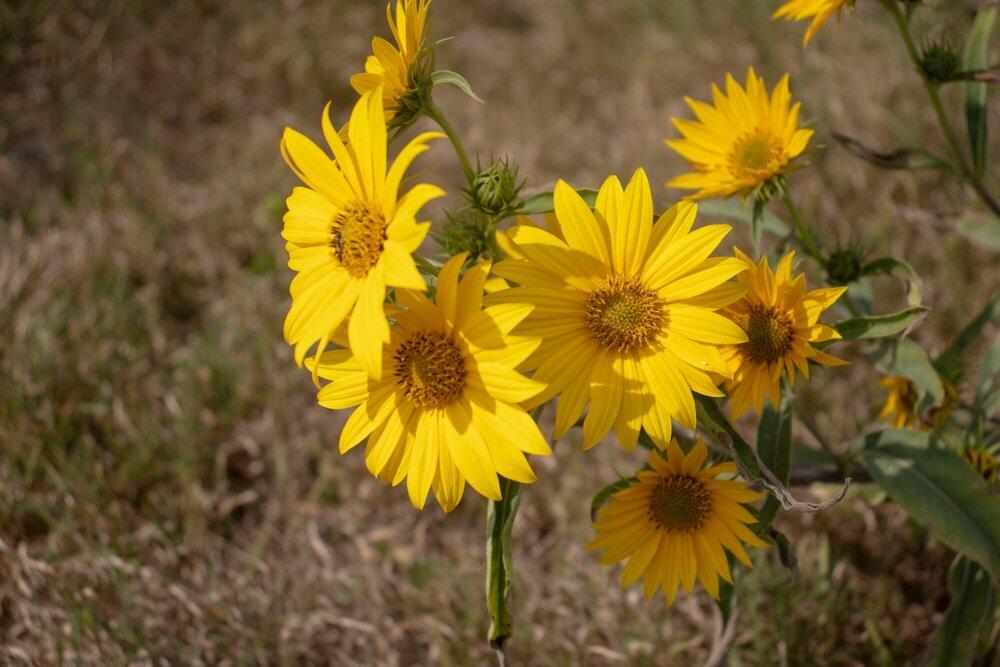
Maximilian sunflower (Helianthus maximiliani) is a native perennial sunflower that grows 3 to 10 feet tall and covers its upper stems with 2- to 4-inch golden-yellow flowers from late August into October. Maximilian sunflower is hardy in USDA zones 4–9 and needs full sun. TN Nursery ships bare-root plants, Buy 1 Get 1 Free.
Maximilian sunflower belongs to the aster family, Asteraceae, and is native to the Great Plains and prairies of North America, from southern Canada through the central United States to Texas and northeastern Mexico. The plant is named for Prince Maximilian of Wied, a German naturalist who traveled up the Missouri River in the 1830s and collected it on the prairie. Unlike the annual garden sunflower, Maximilian sunflower comes back every year from a strong, spreading root system and grows into a fuller, taller clump each season.
Each stem carries narrow, gray-green, slightly folded leaves and a column of flowers along its top third, so a single clump can hold dozens of blooms at once. Maximilian sunflower is one of the last big bloomers of the year, lighting up meadows and borders when most summer flowers are finished.
Maximilian sunflower grows 3 to 10 feet tall, and most garden plants reach 5 to 8 feet by bloom time in full sun. Each clump spreads 2 to 4 feet wide.
Height depends on sun, soil moisture and age. First-year plants from bare roots often bloom at 3 to 5 feet, and established clumps reach their full height in the second and third seasons. For a shorter, bushier plant along a fence or walk, cut the stems back by half in early June; the plant branches and blooms at about 4 to 5 feet.
| Month | Maximilian sunflower growth stage |
|---|---|
| March–April | New shoots emerge from the roots |
| May–July | Stems grow tall and leafy; pinch in early June for shorter plants |
| Late August–October | Peak bloom, with golden flowers along the top third of each stem |
| October–December | Seed heads ripen and feed finches and sparrows |
Yes. Maximilian sunflower is a long-lived perennial that returns every spring from its roots in zones 4–9 and forms a larger clump each year.
Maximilian sunflower spreads by underground rhizomes and fills in quickly as a dense stand, which makes it a natural choice for meadows, field edges and large native beds. A row of plants set 2 to 3 feet apart grows into a seasonal hedge that screens a fence, patio or garden shed from midsummer until frost.
Maximilian sunflower grows best in full sun, with at least 6 to 8 hours of direct light a day, in well-drained clay, loam or sandy soil.
Maximilian sunflower is drought tolerant once established and thrives in the heat of the Plains and the South. Water new plants weekly through the first summer. After that, rainfall is usually enough. Rich soil and extra fertilizer are not needed; lean soil keeps the stems sturdy and upright.
Maximilian sunflower attracts bees, butterflies and seed-eating birds. The late blooms feed native bees and migrating monarchs in September, and the seeds feed American goldfinches, chickadees and sparrows into winter.
Maximilian sunflower is also a host plant for the silvery checkerspot butterfly, whose caterpillars feed on the leaves. Deer usually leave the rough, sandpapery leaves alone. Leave the stems standing over winter to give birds a seed supply and cover, then cut them to the ground in late winter before new shoots appear.
Other sun-loving prairie natives grow well with Maximilian sunflower. Plant purple coneflower and black-eyed Susan in front for summer color, then let the sunflowers take over in fall. Blazing star adds purple spikes, goldenrod echoes the yellow, and bee balm brings in hummingbirds earlier in the season. Find more companions in our sun perennials and butterfly plants collections.
Plant bare-root Maximilian sunflower with the crown 1 inch below the soil surface and the roots spread 4 to 6 inches deep, spacing plants 2 to 3 feet apart. Plant in fall, late winter or spring while the plants are dormant.
Botanical Name: Helianthus maximiliani
Plant Family: Asteraceae (aster family)
Ships: Bare root
Planting Zone: 4–9
Height at Maturity: 3–10 feet
Spread: 2–4 feet
Spacing: 2–3 feet
Sun or Shade: Full sun, 6–8+ hours
Water Needs: Low to moderate; drought tolerant once established
Soil: Well-drained clay, loam or sand
Bloom Season: Late summer to fall (late August–October)
Flower Color: Golden yellow
Origin: Great Plains of North America
Care: Pinch stems by half in early June for shorter plants. Leave seed heads for birds and cut stems to the ground in late winter.
Plant Attributes: Native, perennial, pollinator plant, butterfly host plant, bird seed source, deer resistant, drought tolerant
Maximilian sunflower blooms from late August through October, with peak color in September.
Maximilian sunflower grows in USDA hardiness zones 4 through 9.
Plant Maximilian sunflower 2 to 3 feet apart; a row at that spacing fills in as a seasonal hedge in about 2 seasons.
Yes. Deer usually avoid the rough, sandpapery leaves of Maximilian sunflower.
Yes. Maximilian sunflower is a perennial that returns each spring from its roots and grows a larger clump every year.
Yes. Maximilian sunflower is native to the Great Plains of North America, from southern Canada to Texas.
TN Nursery has grown hardy native plants since 1959, more than 65 years of experience, and has supplied plants to major U.S. landmarks like the Washington Monument and Arlington National Cemetery. At our Altamont, Tennessee nursery, we grow Maximilian sunflower and ship it as dormant bare-root divisions to prairie, meadow and pollinator gardens across the country. Each order is dug and packed fresh so the roots wake up quickly in spring. For more growing tips, read our Guide to Planting Maximilian Sunflower, How To Create a Pollinator Garden and Top 10 Plants to Attract Pollinators on our garden blog.

Since 1959, TN Nursery has grown and shipped quality bare root plants nationwide. Shipped during dormancy, bare-root plants develop strong root systems and establish quickly. Our experienced team carefully harvests and packages every order, providing growers with trusted plants backed by over 65 years of nursery experience.
Learn More About
Bare root trees
Vibrant Yellow Flowers:
Their bright, golden-yellow blooms bring a burst of color and cheerfulness to outdoor spaces.
Attracts Pollinators:
These sunflowers are excellent for attracting bees, butterflies, and other beneficial insects to your garden.
Food for Wildlife:
The seed heads feed goldfinches and other songbirds into winter, and the leaves host silvery checkerspot butterfly caterpillars.
Extended Blooming Period:
Enjoy their vibrant flowers for an extended period, as they bloom from late summer into fall, adding long-lasting beauty to your garden.
Fall Digging
Spring Digging
Packing Orders
Customer Unboxing Video
Product Highlight
I’m very pleased with my Maximilian Sunflower! It arrived healthy and well packaged, and it has been a beautiful addition to my garden. The bright yellow flowers are cheerful and eye-catching.
These Maximilian Sunflowers have been wonderful in the back of my native garden. They grow tall, fill in a lot of space and produce so many flowers. The pollinators have been all over them too.
I’m very pleased with my Maximilian Sunflower! It arrived healthy and well packaged, and it has been a beautiful addition to my garden.
I needed these for a real showstopper. They work. I have had them for 3 years. They are eager to come up. Since I have limited space, not ideal for this plant, I have learned to thin early and aggressively. By keeping them thinned and supporting them, they are providing a really impressive sight and a non-stop show of birds, butterflies, and bees. Worth the work.
I’m amazed at how well these did! They were packaged carefully, and within weeks they started to take off. Now they’re the highlight of my garden.
I ordered Maximilian Sunflowers and received an extra plant as promised. They’re growing beautifully and brighten up the entire yard. Excellent service!
The Maximilian Sunflowers from TN Nursery have been fantastic. They grew quickly and now my yard is full of bright yellow blooms. Couldn’t be happier!
I planted them along the fence line, and they’re growing tall and strong. Not quite as many flowers as I hoped, but still a great purchase.
I planted these about two months ago and they’re already showing buds. The plants look strong and I’m excited to see more flowers soon.
This is my first time ordering. Got them yesterday and planted. We’ll see how they do. Was thinking while planting that maybe should of put them in in spring
I waited until the I so the first leaves appeared, every time I got amazed by how well the plants are arriving, they always take their time to pack it so perfectly , thank you!
Just received them. Put them in the ground and will wait til next year to see something Maximillian.
The roots were beautiful and hardy -can't wait till the rain stops so I can plant them.
Roots look healthy and I planted and watered them. Hopefully these grow I love sunflowers.
The plants were obviously strong and ready to go. I planted them about a week ago and they’re growing already. First time I got Maximillian sunflowers to grow for me. Thank you, TN.
Received in good condition. Planted and looking toward future flowers.
The ones I received a few days ago have been in the ground for 3 days. Not a lot of anything else yet. I received 2 others several months back, and they are growing beautifully. Can't wait until my new ones catch up. Thank You !!! Debbie
I have the plants in water and can’t wait to see the results.
Arrived in good shape, very timely dely Nd i have planted inside until weather breaks T which point they will move yo garden with others.
Maximilian Sunflower
I ordered and planted right away so I'll hv to see in the spring what they do, I'm hopeful they will be beautiful!
Came as expected and on time
I ordered this plant 2 years ago, and it has thrived….so much so that I ordered more this year during the BOGO sale. They arrived healthy, and quickly rooted. The bees and hummingbirds LOVE them, and they bloom all summer.