Sharon Gauss
I’ll let you know if it grows and blooms then

Foam Flower
3-8
Under 12"
Moderate
Partial shade
Spring
Foam Flower thrives in well-drained, organic soil and benefits from frequent watering to moisten the soil. It's best to space plants adequately to ensure good air circulation. Deadhead spent flowers to encourage continuous blooming and trim back dead foliage in early spring.
Foam Flower (Tiarella cordifolia) thrives in partial to full shade. Dappled light under deciduous trees is ideal, and gentle morning sun suits it where the soil stays moist.
Deer resistant & hardy , Attracts butterflies and pollinators, Versatile growing conditions
Sharon Gauss
I’ll let you know if it grows and blooms then
Charski
Got these in the ground as soon as I received them and so far every one that I planted has come up and is growing! Very excited because I really needed something for shady areas.
Michael Ivey
we planted them wasn't long there up and growing well,,we cant wait to see them grow and spread
About this plant
Foamflower (Tiarella cordifolia), also sold as foam flower or heartleaf foamflower, is a native woodland perennial that grows 6 to 12 inches tall and blooms white to pale pink from April to June. Foamflower is hardy in USDA zones 3–8 and thrives in partial to full shade. TN Nursery ships bare-root plants, Buy 1 Get 1 Free.
Foamflower grows wild in the rich, moist forests of eastern North America, from Nova Scotia and Ontario west to Minnesota and south through the Appalachian Mountains to Georgia and Alabama, including the mountain coves of Tennessee. The plant belongs to the saxifrage family, Saxifragaceae, and is a close cousin of coral bells (Heuchera). Other common names include Allegheny foamflower, false miterwort and coolwort. The name comes from the frothy spikes of tiny star-shaped flowers that float above the leaves like sea foam.
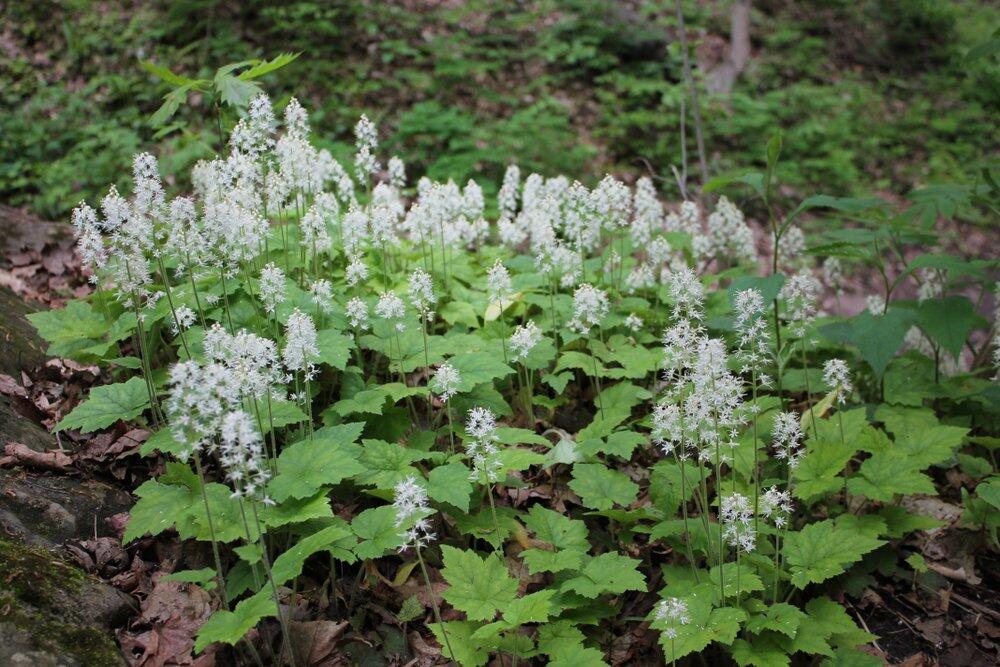
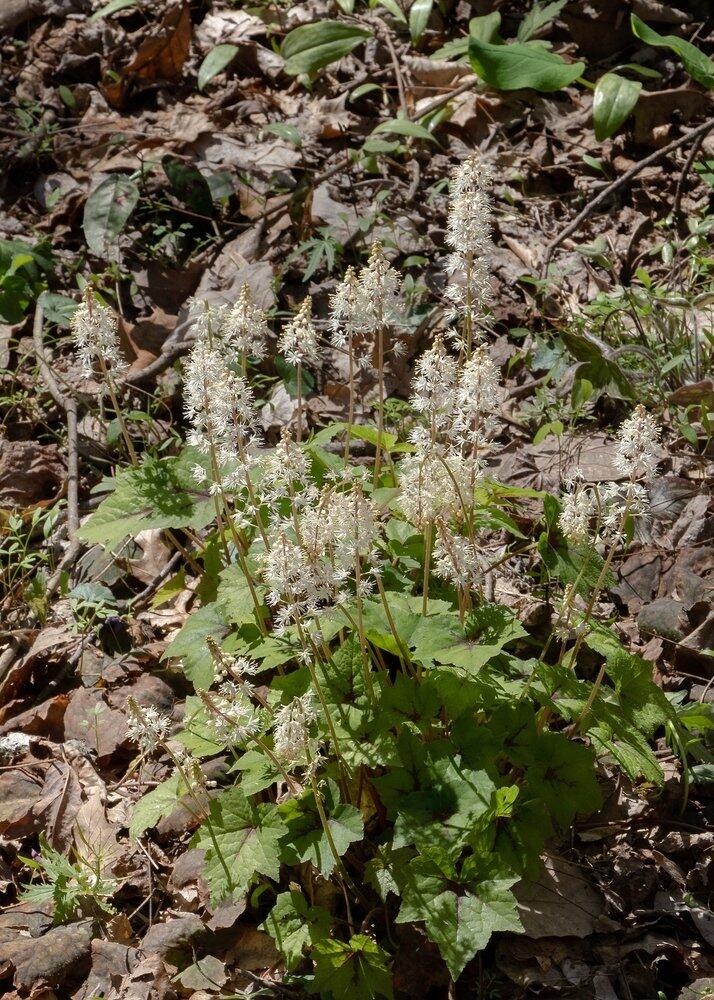
Foamflower forms a low mound of soft, hairy, heart-shaped leaves topped in spring by fluffy white spikes of tiny star-shaped flowers. Each spike rises 3 to 4 inches above the foliage on a slender, leafless stem.
The leaves have three to seven shallow lobes, like a small maple leaf, and many plants show dark burgundy markings along the veins. In autumn the foliage warms to bronze and red tones. A group of foamflowers in bloom looks like a carpet of white froth floating over green leaves, which is why foam flowers make such a bright accent in dim corners of the garden.
Yes. Foamflower spreads by surface runners (stolons) that root where they touch the soil, forming a dense, low ground cover in moist shade. Each plant widens to 12 to 24 inches over a few seasons.
Because foamflower fills in on its own, a few plants become a full woodland carpet in two to three years. The runners are easy to lift and replant in early spring or fall, so one planting can be divided to stretch along a path or under a group of shrubs.
Foamflower grows best in partial to full shade, in moist, humus-rich, well-drained soil that is neutral to slightly acidic. The dappled light under deciduous trees is ideal.
Foamflower also handles gentle morning sun when the soil stays moist. Work leaf mold or compost into the planting bed and keep a 1-inch layer of shredded leaves on the soil, just like a forest floor. Water once or twice a week through the first season, then water during long dry spells.
| Season | What foamflower does |
|---|---|
| March | Fresh leaves emerge; runners begin to grow |
| April–June | White to pale pink flower spikes for 4–6 weeks |
| July–September | Leafy mounds spread by runners into a ground cover |
| October–November | Leaves turn bronze and red |
| Winter | Leaves often hold in mild areas; roots rest |
Good foamflower companion plants are woodland natives that share moist shade, such as ferns, wild ginger and spring wildflowers. Maidenhair fern and Christmas fern add airy height behind the low mounds. Wild ginger knits in alongside as a second ground cover. Virginia bluebells, dwarf crested iris and wild geranium bloom in blue, lavender and pink at the same time. Find more partners in our shade perennials and ground cover plants collections.
Plant bare-root foamflower with the crown level with the soil surface and the roots spread 2 to 3 inches deep, spacing plants 12 to 18 inches apart. Plant in fall or early spring for the best start.
TN Nursery digs foamflower and ships the plants bare root, with no soil around the roots. Each plant arrives as a rooted crown with fibrous roots and buds, sometimes with a few leaves.
Botanical Name: Tiarella cordifolia
Plant Family: Saxifragaceae
Ships: Bare root
Planting Zone: 3–8
Height at Maturity: 6–12 inches in bloom
Spread: 12–24 inches by runners
Sun or Shade: Partial to full shade
Water Needs: Moderate; keep soil evenly moist
Soil: Moist, humus-rich, well-drained soil, neutral to slightly acidic
Bloom Season: April–June
Flower Color: White to pale pink
Native Range: Eastern North America, Nova Scotia to Minnesota and south through the Appalachians to Georgia and Alabama
Care: Mulch with shredded leaves, water in dry spells, trim spent flower stems for a tidy look, and divide runners in spring or fall.
Plant Attributes: Native perennial, shade ground cover, spring blooms, colorful fall foliage, deer resistant
Yes. Foamflower is a long-lived native perennial that returns every spring and widens each year by runners.
Foamflower grows 6 to 12 inches tall in bloom and spreads 12 to 24 inches wide.
Foamflower blooms from April to June, with white to pale pink flower spikes that last about 4 to 6 weeks.
Yes. Deer and rabbits rarely browse foamflower, so foamflower is a dependable ground cover for woodland gardens.
Foamflower grows in USDA hardiness zones 3 through 8.
Yes. Foamflower grows and blooms in full shade as well as partial shade, especially in moist, leafy woodland soil.
TN Nursery has grown hardy native plants since 1959, more than 65 years of experience, and has supplied plants to major U.S. landmarks like the Washington Monument and Arlington National Cemetery. At our Altamont, Tennessee nursery, we grow and ship native woodland plants like foamflower to shade gardens across the country. Each order is dug and packed bare root so the plants settle in quickly and start spreading. Want to learn more first? Read Exploring Foam Flower, 33 Easy Ideas for Shade Gardens and Shade-loving Perennials: Best Plants for Your Garden on our garden blog.

Since 1959, TN Nursery has grown and shipped quality bare root plants nationwide. Shipped during dormancy, bare-root plants develop strong root systems and establish quickly. Our experienced team carefully harvests and packages every order, providing growers with trusted plants backed by over 65 years of nursery experience.
Learn More About
Bare root trees
Lush Foliage:
Bright green leaves up to four inches wide, with variable shapes and colors that often turn red and bronze in fall.
Propagation:
Can be propagated by dividing roots in late fall or starting seeds indoors ten weeks before the last spring freeze.
Wildlife Attraction:
Attracts bees and other pollinators, with seeds providing nourishment for some small mammals.
Unique Flowers:
Named for its tiny white blooms on three- to four-inch racemes, floating on long, graceful stems.
Fall Digging
Spring Digging
Packing Orders
Customer Unboxing Video
My Foam Flower is absolutely beautiful! The delicate blooms came up wonderfully, and it has filled in my shady garden with the prettiest soft, natural look. I love them
The Foam Flower has been perfect for the shady part of my garden. It arrived as a bare-root plant and came up better than I expected.
They look great! Hopefully I can get them to grow. It would have been helpful to have some planting 'instructions'. I'm kinda 'winging it'. thanks again.
The Foam Flowers are thriving in my backyard. Their heart-shaped leaves and white blooms give my shade garden the soft, natural look I wanted. Highly recommend!
Absolutely love these Foam Flowers! They arrived healthy and took off quickly in my woodland bed. The blooms are airy and elegant.
I planted them under my dogwood tree, and they’re already spreading nicely. Easy to care for and very pretty.
The delicate white blooms brighten up the shady spots in my yard. Even after flowering, the foliage adds nice texture.
Very pleased with the quality. The plants were shipped carefully and look healthy. No flowers yet, but the leaves are lush and green.
Foam Flower is a sweet addition to my shady garden bed. The foliage looks great even without blooms, and the plants are spreading steadily.
The Foam Flower plants from TN Nursery were exactly what I needed. Strong, vibrant, and easy to establish, they are a wonderful choice for natural gardens.
The Foam Flower I purchased is absolutely thriving. TN Nursery provided top-quality plants that bring unique beauty and texture to my woodland garden.
I’m thrilled with my Foam Flower purchase. TN Nursery provided high-quality plants that rooted quickly and are already showing growth. Perfect addition to my shade beds.
My Foam Flower order came in excellent condition. The plants were lush and healthy, and I was impressed with how quickly they took to the soil. TN Nursery really delivers.
The Foam Flower plants I ordered are thriving beautifully. TN Nursery delivered vibrant and healthy plants that brightened my landscape with ease. Highly recommend them.
I was amazed at the quality of the Foam Flower roots from TN Nursery. They were packaged with care and established quickly once planted. Excellent service and product quality.
I’ll let you know if it grows and blooms then
Got these in the ground as soon as I received them and so far every one that I planted has come up and is growing! Very excited because I really needed something for shady areas.
we planted them wasn't long there up and growing well,,we cant wait to see them grow and spread
The bare root foam flower plants arrived quickly. Once in the ground they started to leaf quickly and I am optimistic that they will continue to do well.
They came to life right away and have a number of leaves at 4 weeks.
The plants were in great shape but I would have liked a little more information up front and included with the plants indicating first year care and expectations. I what I read was basically plant water well and wait until next year to see results. That seems a little lite on care .
too early to tell...
Best for ornamental presentation. I so love it when color changes from white to pink as the season goes by.
Great plant and reasonable price.
Arrived dormant. Can't wait till spring now!
If you want to attract wildlife this is the plant to get
We spotted your 5-star review. Wow! Thank you so much for trusting us, and we can’t wait to help you again in the future.
Excellent -- look forward to seeming them in spring
Great friendly service. Nicely packaged and quick shipping. and all my flowers where great
We’re really grateful and appreciate you taking the time to share your rating with us, Becky. We hope to see you shopping with us again!
The blooms on this plant are very unique and beautiful. Looks great in my gardens! Very pleased with this plant.
The blooms on this plant are very unique and beautiful. Looks great in my gardens!
This is a beautiful flower. It was packaged nicely and is lovely to look at.
The blooms on this plant are very unique and beautiful. Looks great in my gardens!
These flowers are very pretty and gives gardens a very natural look