
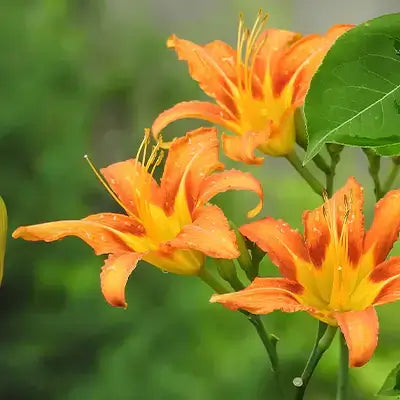
The Common Orange Daylily
The Orange Daylily (Hemerocallis fulva) is one of the toughest, easiest summer-blooming perennials. Its bright orange, trumpet-shaped flowers brighten roadsides and gardens across the country in early to midsummer.
Description
- Flowers: Orange, 3 to 5 inches across, with six petal-like tepals and a darker orange band. Each flower lasts one day, but each stalk carries many buds.
- Bloom time: June to July.
- Size: 2 to 4 feet tall with arching, strap-like leaves.
- Origin: Native to Asia and widely naturalized in North America.
Hardiness Zones
Orange daylilies grow in USDA zones 3 to 9.
Light
Full sun produces the most flowers. They also bloom in partial shade.
Water
Water regularly the first season. Established plants are very drought tolerant.
Soil
Daylilies grow in almost any well-drained soil, including clay and poor soils.
Fertilizing
A little compost in spring is plenty.
Spreading
Orange daylilies spread quickly by underground roots, making them excellent for covering slopes and banks. In garden beds, use edging to keep them where you want them, and divide clumps every few years.
Growing From Seed
The common orange daylily rarely sets seed and is grown from divisions.
Containers
Daylilies grow well in large pots with drainage. Divide or repot every few years when crowded.
Mulching
A layer of mulch holds moisture and keeps weeds down.
Companion Plants
Pair orange daylilies with Black-Eyed Susans, coneflowers and ornamental grasses.
Pet Safety
Daylilies are toxic to cats, so plant them where cats won't nibble them.


