
How to Plant a Peach Tree With the Right Pollination Plan
We help you match fruit trees for stronger July harvests, better spacing, and fewer pollination misses in Tennessee yards.
July Is When Better Fruit Tree Plans Start
- Clear breakdown of self-pollinating versus cross-pollinating fruit trees
- July planning tips for spacing, sun exposure, and bloom timing
- Practical yard notes for peaches, plums, cherries, figs, and blueberries
- Honest reminders about netting, shade, and compatibility before you plant
Pollinator Color and Thundercloud Plum Tree Companion Picks
When you plan how to plant a peach tree, nearby bloom timing and pollinator activity matter. These three plant picks add long-season color, support butterflies and hummingbirds, and give you flexibility in a small yard.


Pollinator-Friendly Garden Picks to Pair With Fruit Tree Netting
When you plan how to plant a peach tree, the work does not stop at spacing and sun. We also like adding long-blooming color nearby, so these three picks bring pollinator support, mixed flowering color from spring into fall.
Plant Fruit Trees for Better Pollination and Long-Term Growth
If you are learning how to plant a peach tree, start with the hole, not the fertilizer bag. We dig a hole twice as wide as the root spread, keep the trunk flare just above soil level, and backfill with the same native soil so roots move outward instead of circling in a soft pocket.
Then water deeply. Not lightly. A slow soak settles soil around the roots and helps young trees handle July heat better than a quick daily sprinkle.
How to choose the right how to plant a peach tree?
Choose trees that match your planting zone first. If you garden in Tennessee, that matters more than chasing a variety name. We always tell customers to check winter lows, summer heat, and drainage before planting.
If your yard also includes white flowering trees in tennessee, keep enough open space around fruit trees so they still get full sun and moving air. That extra airflow lowers stress and helps pollinators move from bloom to bloom.
Spacing that helps pollination
Spacing changes fruit set more than many new growers expect. Self-pollinating fruit trees for beginners can produce alone, but they still benefit from nearby pollinator activity. Cross-pollinating fruit trees for home gardens need even better planning.
- Small yards: Keep most fruit trees about 12 to 18 feet apart, based on mature size.
- Tighter spacing: Works only if you prune every year and keep light in the center.
- Mixed plantings: Avoid crowding a cherry tree or a thundercloud plum tree where branches will overlap fast.
Good spacing is not wasted space. It is the room your tree needs to flower, dry off, and set fruit well.
What are the best how to plant a peach tree to buy?
The best planting plan is one that fits your zone and your yard width. So, before you plant, map the mature canopy, check sun for at least six hours, and decide if you need one tree or a pollination partner.
Support plants and practical extras
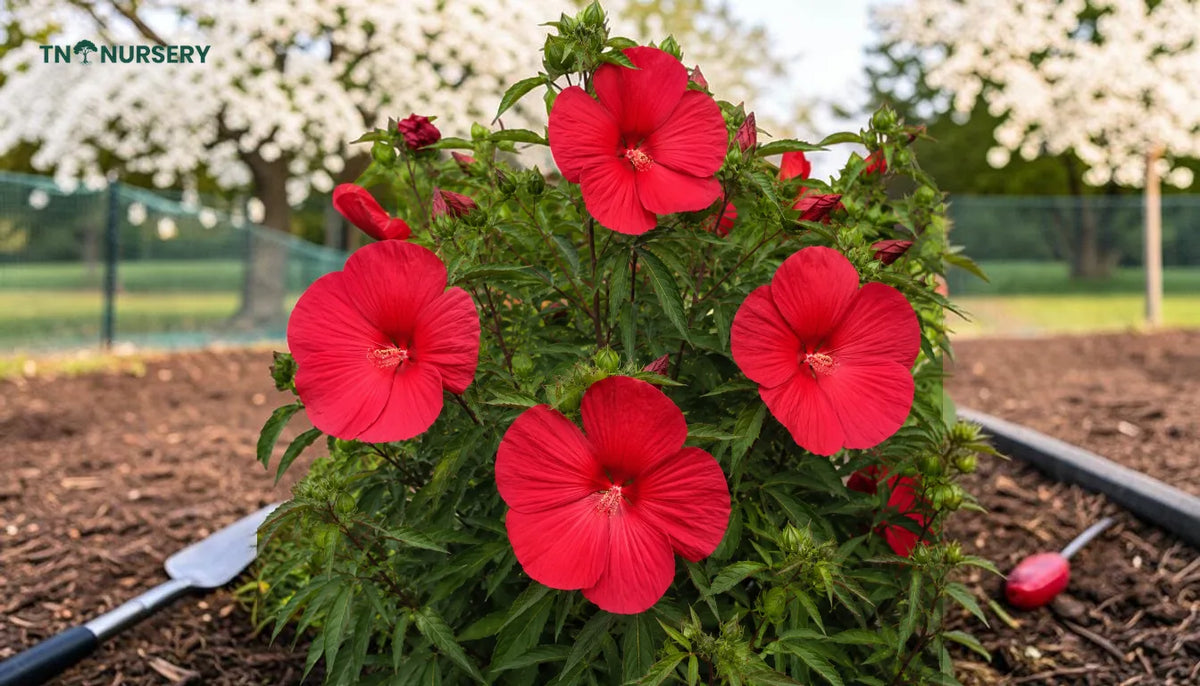
We often use flowering plants near the orchard edge to draw in pollinators. Our Rose Mallow Plant for pollinator support grows in planting zones 4-9 and attracts butterflies and hummingbirds. Keep in mind, it can reach 5 to 6 feet tall, so place it where it will not shade young fruit trees.
Our 25 Flowering Plants Collection for pollinator borders ships as 25 bare-root plants for zones 4-9, which makes it useful for longer borders around an edible yard. And if birds pressure ripening fruit later, add fruit tree netting before color change, not after pecking starts. For browsing, you can also explore our Fruit Trees and Edible Plants collections.
One last thing. Go easy on the best fertilizer for fruit trees question in year one. We would rather see a tree root in well than push soft, fast top growth too early.
Frequently Asked Questions
Can I still plant in July if I’m learning how to plant a peach tree or other yard plants?
Yes, you can still plant in July, but you need to watch heat and soil moisture closely. We ship live plants, trees, and shrubs for real garden use, so summer planting works best when you water deeply and plant early in the day. Our Rose Mallow Plant handles warm weather well in zones 4-9 and grows 5-6 feet tall, which makes it useful near wet spots. Keep in mind, fruit trees and other flowering trees often need more careful watering than moisture-loving perennials during a hot Tennessee summer.
Which plants here help pollinators if I’m planning around fruit tree bloom?
Our Rose Mallow Plant is the clearest pollinator helper in this group. It has large hibiscus-like blooms and attracts butterflies and hummingbirds, which helps support an active yard during the growing season. Our 25 Flowering Plants Collection also includes mixed blooming perennials that attract pollinators. If you are planning for a cherry tree or other cross-blooming yard plants, adding long-season flowers nearby can help keep pollinator traffic moving through the space.
What should I know about spacing when I add companion plants near fruit trees?
Use simple fruit tree spacing tips for yards: keep smaller companion plants outside the root flare and away from the trunk. Our Rose Mallow Plant stays under 10 feet at maturity, and the 25 Flowering Plants Collection includes over-12-inch perennials, so they fit better along borders than right under a young tree. But don’t crowd the planting hole. Airflow matters in July, especially when heat and humidity rise.
Do you sell anything useful for beginners who are not ready for orchard planting yet?
Yes. Our Terrarium Plants Kit is a good starting point if you want hands-on plant care before tackling outdoor projects like self-pollinating fruit trees for beginners. It ships bare-root, works in zones 3-9, and is meant for closed containers or ecosphere-style setups. It will not replace outdoor pollination planning, of course. Still, it gives you a low-space way to practice watering and plant monitoring.
Do you carry products that fit a pollinator-focused summer yard plan, even if I’m also thinking about the best fertilizer for fruit trees?
We do, but we only sell plants, trees, shrubs, and seedlings. That means we can help with living companions like the Rose Mallow Plant and our 25 Flowering Plants Collection, both useful for adding bloom around edible plantings. We do not sell fertilizer or fruit tree netting in this catalog. So if your goal is stronger pollinator activity, start with bloom timing and plant placement first.
How does shipping work for your live plants?
We ship all items by 3-4 day ground shipping. Some products also show product-specific timing on the listing. For example, the 25 Flowering Plants Collection is marked Ships Now, while the Mistletoe Holiday Sprig shows a June 2026 shipping note. If you need help before ordering, email us at customerservice@tennesseewholesalenursery.com.
What is your return, refund, and warranty policy?
We do not offer refunds. We do not accept returns, and we do not offer a warranty on any product unless an extended warranty is purchased at the time of order. If there is an issue that qualifies for a reshipment, we handle that instead of a return. You can contact us at customerservice@tennesseewholesalenursery.com or write to Tennessee Wholesale Nursery, 12847 State Route 108, Altamont TN 37301, United States.
Ready for Summer Fruit Tree Planting?
If you're learning how to plant a peach tree, now is a good time to act. We stock zone-ready fruit trees and edible plants for Tennessee yards, so you can plant while the soil is warm and root growth gets going.
