
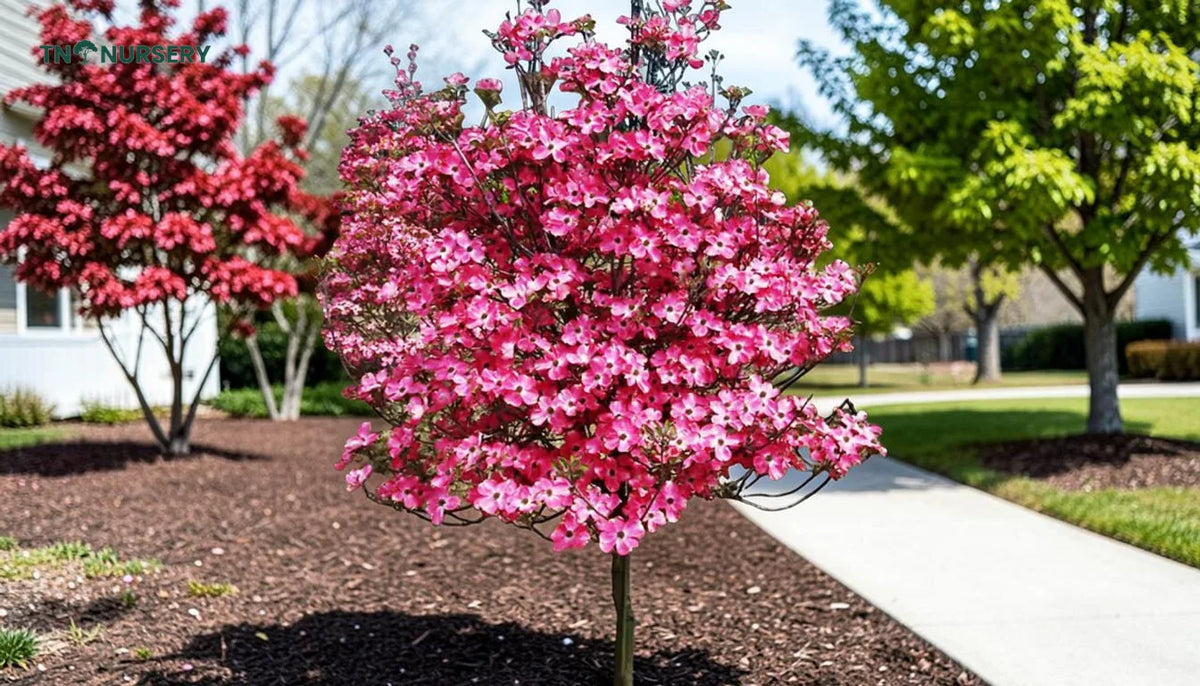
7 Flowering Trees We’d Plant for Fresh Spring Curb Appeal
Want easy front yard landscaping ideas? We’re sharing spring favorites that bring color, shape, and lasting yard interest without overwhelming smaller spaces.
What are the best flowering trees to buy?
- Red Dogwood Tree brings red spring bloom and stays under 25 feet
- Pawpaw handles partial sun and shade while adding native fruit interest
- Peach offers pink blossoms, but it needs more hands-on seasonal care
- Apple adds white spring flowers, summer shade, and fruit in zones 3-8
Shop flowering trees and fruit picks for front yard landscaping ideas
If you want spring color now and useful shade or fruit later, this mix covers both jobs. We included the Red Dogwood Tree, Pawpaw Tree, Peach Tree, and Apple Tree because each brings a different part of the story.


Flowering Trees and Front Yard Landscaping Ideas That Add More Than Spring Color
If you want a yard that looks lively from spring through harvest season, these four trees cover color, fruit, and useful shade. We grouped them together because each one fits home landscapes well, and they bring something useful, too.
How to Choose a Curb-Appeal Tree for Your Yard
Choosing flowering trees for curb appeal gets easier when you sort by sunlight, mature size, bloom season, and the care you can actually keep up with. We suggest starting with the spot itself. Count the sun hours, picture the tree at full height, and decide whether you want spring color, summer fruit, or both.
How to choose the right flowering trees?
Match the tree to the site first. Then match it to your routine. A tree that fits your light and watering habits will usually look better than one picked only for bloom color.
Start with sun exposure
If your front yard gets strong light most of the day, our Peach Tree for full-sun yards and Apple Tree for sunny planting areas both need at least 6 to 8 hours of direct sun. They bloom in spring, stay under 25 feet at maturity, and give you more than looks. You also get fruit later in the season.
Have a brighter morning and softer afternoon? Our Red Dogwood Tree for partial shade to full sun fits that pattern well. If your site leans shadier, the Pawpaw Tree for partial sun and shade handles understory conditions better than most fruiting trees.
Watch mature size and bloom timing
- Red Dogwood Tree: under 25 feet, red spring blooms, good for smaller front beds
- Pawpaw Tree: under 25 feet, useful where shade limits other choices
- Peach Tree: 12 to 20 feet tall, pink spring flowers, fruit follows
- Apple Tree: up to about 20 feet in many home settings, white spring bloom, summer fruit
If you like the look of a cherry tree or a cherry blossom tree, keep the same selection rules in mind. Sun, size, and upkeep matter more than the photo. The same goes for a bing cherry tree in a front-yard plan.
What are the best flowering trees to buy?
For lower maintenance, we would pick Red Dogwood first. It gives you red bracts in spring, berries for birds, and only light pruning in late winter. But if you want edible payoff, Apple Tree is the stronger long-term yard tree.
"Pick the tree that fits your light and your weekends. That choice usually looks best five years from now."
One honest tradeoff: Peach Tree rewards you with fragrant pink bloom and fruit, but it needs the most attention for watering, thinning, and pest checks. For practical front yard landscaping ideas, that matters. You can browse more options in our Trees for Sale collection when you are ready to plant.
Frequently Asked Questions
What are the best flowering trees to buy for a front yard?
For strong spring color, we usually point customers to our flowering trees that stay manageable in home landscapes. The Red Dogwood Tree grows 15 to 30 feet tall, blooms red in spring, and fits zones 3 to 9, so it works for many yards. If you want edible appeal too, our Peach Tree adds pink spring blooms and fruit later on. And if you like classic orchard style, our Apple Tree brings white blooms, summer shade, and fruit in zones 3 to 8. Keep in mind, a dogwood is easier for ornamental curb appeal, while peach needs more hands-on care.
How to choose the right flowering trees for your yard?
Start with sunlight and zone range. Our Red Dogwood Tree handles partial shade to full sun, while Apple Tree and Peach Tree need full sun for the best bloom and fruit. If your planting spot gets filtered light, the Pawpaw Tree is one of the few fruiting types of trees we carry that can handle partial sun and shade. Size matters too. All four stay under 25 feet at maturity, which makes them easier to fit into front yard landscaping ideas than a much larger shade tree.
Which tree gives the most spring curb appeal with the least upkeep?
The Red Dogwood Tree is the easiest pick here. It gives you red spring bracts, graceful branching, small red berries for birds, and even some seasonal shade once established. We also like that it needs only light pruning, mainly to remove damaged or rubbing branches in late winter. But watch soil moisture during dry spells, especially in the first seasons. That one step matters with dogwood.
Can I plant a fruit tree in the front yard and still keep it attractive?
Yes, and we do this often with Apple Tree, Peach Tree, and Pawpaw Tree. Apple Tree gives you white spring bloom, a rounded form, and fruit in mid-to-late summer, so it works well when you want plants for all seasons. Peach Tree has soft pink blossoms that read almost like a cherry blossom tree from a distance, but it needs more pruning and monitoring for pests. Pawpaw is different. It handles some shade, has large tropical-looking leaves, and brings unusual fruit, though it is more subtle in bloom than dogwood or peach.
Which tree is best if I want spring bloom and summer interest?
If you want color first and structure later, choose Red Dogwood Tree. If you want bloom plus harvest, Apple Tree or Peach Tree make more sense. Apple gives you white spring flowers and fruit later, while Peach adds pink bloom and ripe fruit after that. For a softer, woodland look, Pawpaw Tree adds bold foliage and an edible crop. So the answer depends on whether you care more about flowers, fruit, or both.
How are your trees shipped?
We ship all items with 3-4 day ground shipping. Each of these trees, including Red Dogwood Tree, Pawpaw Tree, Peach Tree, and Apple Tree, is shipped as bare-root stock. That means you should plan to plant soon after delivery and water well from the start. If you have a question about your order, reach us at customerservice@tennesseewholesalenursery.com.
Do you accept returns, refunds, or offer a warranty?
We do not accept returns, and we do not offer refunds. We also do not include a warranty unless you purchase an extended warranty at the time of order. If there is an issue that qualifies, we may offer a reshipment instead. If you need help, contact us at customerservice@tennesseewholesalenursery.com or write to Tennessee Wholesale Nursery, 12847 State Route 108, Altamont TN 37301, United States.
Shop Flowering Trees for Spring Curb Appeal
Ready to refresh your entry view? Browse our tree collection for spring-ready picks, from the red-flowering dogwood to fruiting favorites that bring blooms, shade, and long-term structure. Keep your landscape looking fresh all season long.

