
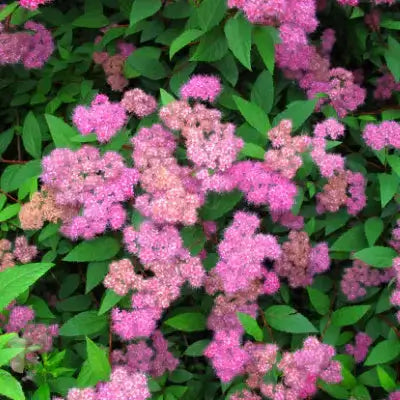
Pink Spirea Shrub
The pink spirea is a favorite for home gardeners and landscapers alike, admired for its vibrant blossoms and three-season color. A hardy, deciduous shrub and member of the Rosaceae family, it does well in hardy zones 4 to 9. This plant gets its name from the Greek word, spirea which means spiral, and refers to the coiled or wreath-like clusters of its small, showy flowers in bursts of mauve, pink, rose, and red.
Three-Season Color
Spirea bushes belong to a genus of more than 80 woody shrubs woody shrubs and typically fall into spring or summer classifications. April to May spring bloomers include the well-known bridal wreath species, which produces large panicles of soft white flowers along gently bowing branches. A summer bloomer, pink spirea blossoms spirea blossoms from June to August, its clusters of pink, red and white flowers appearing on more upright stems. There are many cultivars of spirea which also produce an abundance of color.
While the flowers themselves are beautiful, the fine-textured, lanceolate leaves of pink Spirea are equally lovely. During the spring and summer months, spirea displays foliage varying in color from chartreuse to deep green. In autumn, however, spire foliage turns gorgeous shades of yellow, orange-red, and sometimes purple, creating added interest to gardens and landscapes.
Planting and Care
Pink Spirea bushes are a fast-growing, excellent ornamental choice for perennial gardens and borders. They pair well with hydrangeas, Hostas, and spikes of salvia. Because species of Spirea grow to varying heights, some are good choices for foundation plants, while others may be better in a mid-border planting. A bridal wreath, which can grow from four to eight feet in height with a six to eight-foot spread, is often utilized as an eye-catching privacy hedge.
Spirea takes well to pruning, and doing so promotes healthy growth. Spring flowering species should be pruned immediately after flowering. On the other hand, summer-flowering species should be pruned in winter after the leaves have fallen. Easy to grow and care for, pink spirea attracts bees and butterflies, and various other pollinators.
While pink spirea can handle moderate shade, for the most vibrant blossoms and fall foliage color, plant these shrubs in full sun and neutral or slightly acidic, well-drained soil. Deadhead flowers immediately after they bloom to encourage new growth.
Planting Spirea
We ship Pink Spirea for planting in zones 3-8. That wide range makes it useful for many home gardens, from colder winters to fairly warm summers. It handles full sun to light shade, but we see the best bloom set in sunnier spots. If your border gets only partial sun, it can still grow well, though flowering may be lighter.
Pink Spirea naturally flowers from late spring to early summer. Some varieties can rebloom through summer, but you should expect the heaviest show first, then lighter repeat color if conditions stay good. Deadheading spent blooms helps the plant look tidier and may encourage more flowers. Keep in mind, if your goal is nonstop flowers that bloom all summer, Pink Spirea gives you a long season of interest, but not a constant solid flush every week.
It arrives bare-root, so planting matters. Set it in moist, well-drained soil, and give the crown enough room to sit naturally without bending roots into a tight circle. In hotter spots, a little afternoon shade is fine, but you'll usually get the strongest bloom set with more sun.
Pink Spirea needs moderate moisture while it establishes. We suggest a deep soak right after planting, then steady watering during the first stretch of active growth.
Fall is an excellent time for planting shrubs in fall because cooler weather lowers stress on new roots. Spring planting works too. Keep in mind that soggy ground is the real problem here, not cold.
We ship Pink Spirea bare-root, so plant it as soon as you can after delivery. Set the roots in moist, well-drained soil, and spread them out instead of bending them into a tight hole. Water it in well, then keep the soil evenly moist, not soggy, during establishment. So, if you are planting shrubs in fall, this format is actually handy because bare-root plants are lighter to handle and easier to settle into cooler soil.
Spirea Care and Watering
For a smaller border, Pink Spirea is one of the easiest shrubs we offer to place and maintain. It fits zones 3 through 8, attracts butterflies, and its mounded shape works well in front of taller shrubs for landscaping.
If you want low maintenance shrubs, choose by mature size first. Pink Spirea tops out under 10 feet, and most plants stay much smaller, so you won't spend every season fighting its shape.
Not much, which is one reason first-time buyers choose it. Pink Spirea has moderate water needs, and once it settles in, it is heat and cold tolerant in the right zone. We suggest watering regularly at first, removing spent flowers, and pruning in early spring before leaf-out. It is also mainly pest and disease free. But check for rabbit damage before winter, because young stems can get nibbled.
Pruning Spirea
For pruning, cut in early spring before leaves emerge. Remove the thickest old canes down to the ground, then round the younger stems into a soft mound. That method pushes fuller growth and better bloom coverage. If you want flowers that bloom all summer, deadheading spent clusters can help some spirea varieties rebloom. And if you're comparing it with white flowering bushes or a potentilla shrub, Pink Spirea gives a stronger pink color note, but not an evergreen look like some types of evergreen shrubs.
Soil and Sunlight for Spirea
If you're building a border with long color and strong structure, these picks work hard in different seasons. You'll find pink blooms for spring and late summer, plus a moisture-loving accent for wet shade and add steady texture.
About Spirea
We grow Pink Spirea for bright summer borders. You get pink blooms, a tidy 2 to 4 foot shape, and a flowering shrub for sunny borders in zones 3 to 8.
We do not offer refunds, and we do not accept returns. We also do not offer a warranty on any product unless an extended warranty is purchased at the time of order. If there is an issue, we can offer a reshipment in qualifying cases. Look, we want you to know that upfront before you order. If you need to contact us, we are TN Nursery at Tennessee Wholesale Nursery, 12847 State Route 108, Altamont TN 37301, United States.
Propagation
Planting a Spirea bush is simply a matter of digging a hole twice as wide and as deep as the existing root ball and sprinkling the hole with bone meal. After the bush is planted, backfill and cover with a few inches of compost.
Spirea plants can also be propagated from softwood and hardwood cuttings and by ground layering. The latter bypasses cutting by bending soft stems still attached to the mother plant and laying them across the ground in a 1-inch deep, 3-inch long trench. Successful propagation can be had by removing the leaves from these stems, scouring the outer bark in spots, pinning them to the ground, and covering the trench with soil. Keep the soil moist, and new roots should form in six to eight weeks, after which you can sever the stems from the mother plant and transplant them.


