November is one of the best months of the year to put a tree in the ground. Leaves are down, soil is still workable across most of the South, and a tree planted now has all winter to grow roots before it has to support a single new leaf. The hard part is choosing. To make that easier, we pulled the published extension records for 11 of the native trees, shrubs and vines our customers ask about most and put them side by side: how big each gets, where it is hardy, and what it actually does for wildlife.
Every figure below comes from university extension sources, cited at the end. You are welcome to use the chart on your own site or in your publication. The embed code is at the bottom of this post.
Share this infographic
FacebookPinterestXLinkedInEmailWant it on your website? Scroll down for the free embed code.
Why fall is planting season
Clemson Cooperative Extension's Home & Garden Information Center says balled-and-burlapped trees "are best planted in the fall to take advantage of the dormant season root growth." The reason is simple plant economics: fall planting lets the carbohydrates a tree stored during the previous growing season go to root growth, which, Clemson notes, "may lessen the dependency of the plant on supplemental irrigation the following summers."
In practical terms, a tree planted in November in Tennessee meets its first summer heat with a head start on its root system, rather than trying to establish roots and leaves at the same time.
The chart: 11 natives at a glance
| Plant | Mature height | USDA zones | Documented wildlife value |
|---|---|---|---|
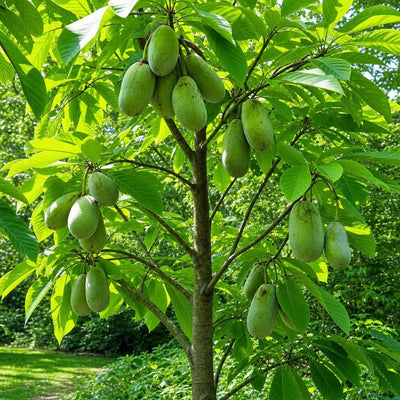
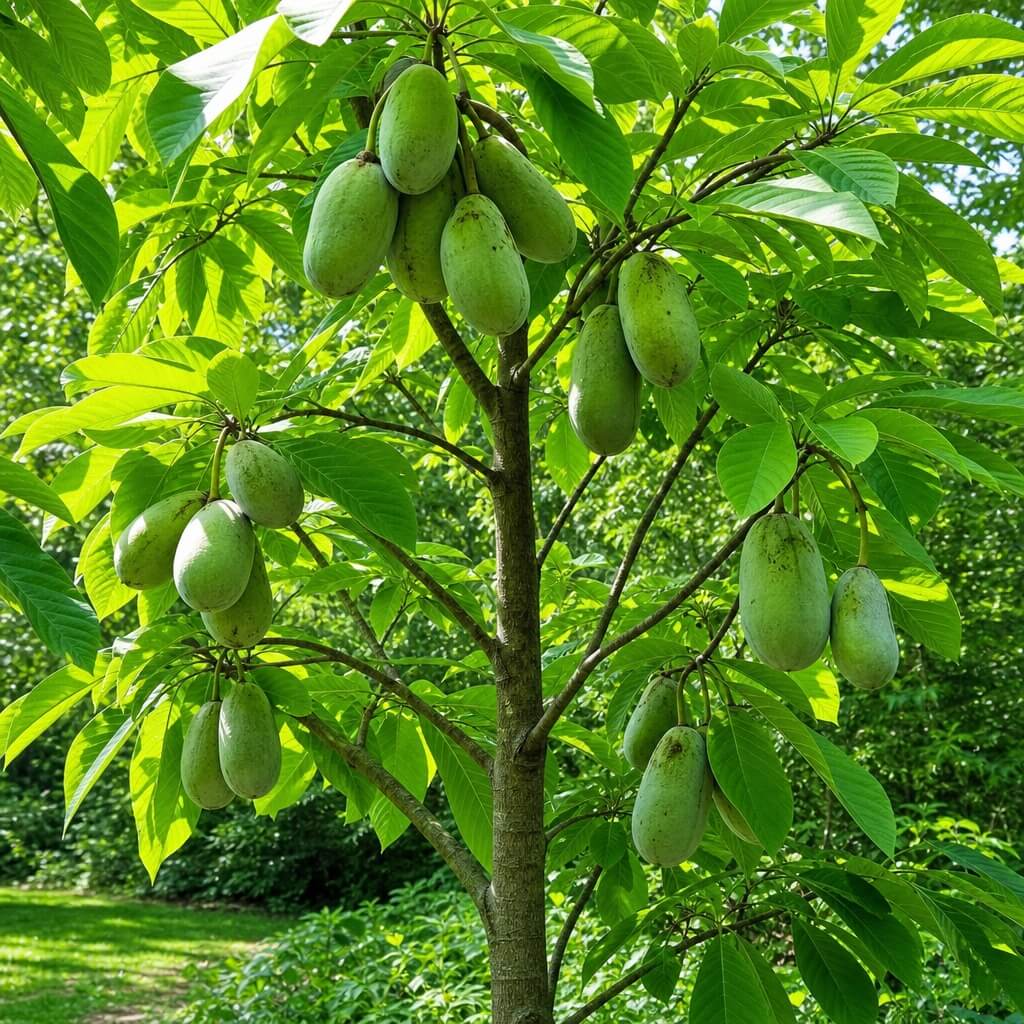
| Pawpaw (Asimina triloba) | 15–30 ft | 5a–9b | Larval host of the Zebra Swallowtail; fruit eaten by songbirds, wild turkeys, foxes and black bears |
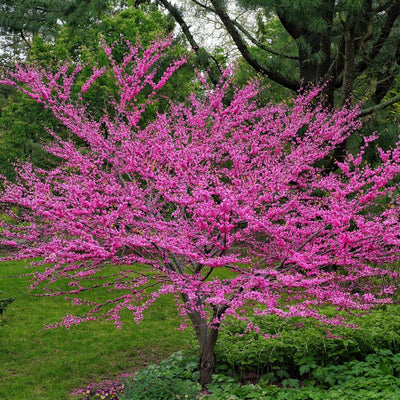
| Eastern Redbud (Cercis canadensis) | 20–30 ft | Not listed on source | Early-spring bloom attracts bees and butterflies; the genus supports the specialist bee Habropoda laboriosa |
| White Oak (Quercus alba) | Typically 80–100 ft | 3a–9b | Acorns feed woodpeckers, blue jays, turkeys, deer and black bears; host to hairstreaks, duskywings and the Imperial Moth |
| Northern Red Oak (Quercus rubra) | 50–75 ft | 4a–8b | Same acorn and caterpillar value as white oak; faster growing |
| Red Maple (Acer rubrum) | Most commonly 40–70 ft | 2a–9b | Early flowers provide nectar for bees; Imperial Moth host; seeds for birds |
| Sugar Maple (Acer saccharum) | 40–120 ft | 3a–8b | Imperial Moth host; cavities used by nesting birds; seeds for birds and small mammals |
| American Elm (Ulmus americana) | 60–80 ft | 3a–9b | Host to Eastern Comma, Mourning Cloak and Question Mark butterflies |
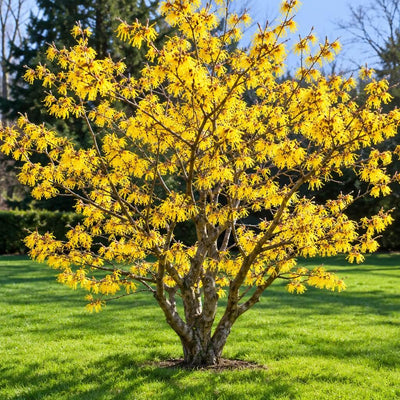
| Witch Hazel (Hamamelis virginiana) | 15–30 ft | 3a–9b | Blooms October–December, pollinated by moths; seeds eaten by wild turkeys |
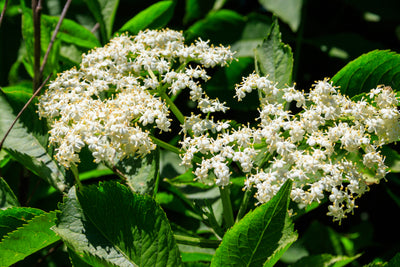
| American Elderberry (Sambucus canadensis) | 5–12 ft | 4a–8b | Fruit for songbirds and mammals; hollow dead stems house native stem-nesting bees |
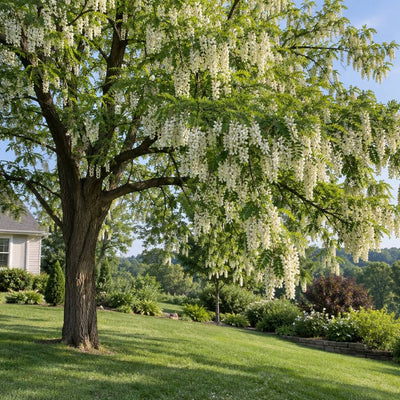
| Black Locust (Robinia pseudoacacia) | 30–50 ft | 3a–8b | Fixes nitrogen; Silver-spotted Skipper host; flowers attract bees |
| Trumpet Vine (Campsis radicans) | 30–40 ft (vine) | 4a–10b | Hummingbirds are its principal pollinator; host of the Plebeian Sphinx moth |
Best picks by goal
For the most wildlife per tree: oaks
NC State Extension lists white oak and northern red oak as larval hosts for a long roster of caterpillars, including the Imperial Moth, Banded, Edward's, Gray and White-M Hairstreaks, and Horace's and Juvenal's Duskywings, and notes that their acorns feed woodpeckers, blue jays, small mammals, wild turkeys, white-tailed deer and black bears. Oaks are a long game: northern red oak typically begins bearing at 20–25 years and produces acorns abundantly at 40–50. White oak is slow and has a deep taproot that makes transplanting difficult, which is one more reason to plant young trees in fall and let them settle in. Browse all of our native and shade trees, including bur, pin, willow and overcup oaks.
For fruit you can eat: pawpaw and elderberry
The pawpaw is a 15–30 ft understory tree with custard-textured, banana-like fruit that ripens roughly August to October, according to NC State. Plant at least two genetically different trees, because a pollinizer is needed to set fruit. It is also the larval host of the Zebra Swallowtail, and it tolerates black walnut. At TN Nursery we have grown roughly 2 million pawpaw trees from about 2 tons of seed, so this is a tree we know well; our pawpaw growing guide covers spacing and care.
American elderberry (also sold as Black American Elderberry) is a 5–12 ft shrub that blooms in June and ripens purplish-black fruit from late summer into fall. NC State cautions that its leaves, stems, roots and unripe fruit contain cyanogenic glycosides, and that cooking reduces toxicity, so never eat elderberries raw or unripe.
For color in the off-season: witch hazel and redbud
Common witch hazel is the rare native that blooms when almost nothing else does. NC State gives its flowering window as October to December, and its blooms are pollinated by noctuid moths. Eastern redbud flips the calendar, flowering rose-pink to light purple in early spring before its leaves appear. NC State notes redbud does not tolerate root disturbance, so plant it where it will stay, early, and water it well until established. We have grown more than 200,000 redbuds at our Tennessee farm. See more early bloomers in our flowering trees collection.
For fall color and fast shade: maples
Red maple is hardy from zone 2a to 9b, turns red, burgundy, orange or yellow in fall, and its early flowers feed bees when little else is open. Its shallow surface roots can buckle sidewalks, so keep it back from paving. Sugar maple brings gold-to-red fall color and heavy shade but is sensitive to heat, drought, compaction and road salt. Our maples have a small claim to fame: the U.S. Air Force and the Discovery Channel used TN Nursery maple trees for a time-lapse of a tree going from dormancy to full leaf. Compare options in our fall foliage trees collection.
Plants that need a careful site
- American elm: NC State calls Dutch elm disease fatal with "no known cure." Resistant cultivars such as 'Princeton' exist.
- Black locust: Useful for nitrogen fixing and reclaiming poor ground, but NC State notes it has become invasive in the Midwestern U.S., spreads by root suckers, and its bark, leaves and seeds are poisonous to people, pets and livestock. Best for large rural or restoration sites within its native range.
- Trumpet vine: A hummingbird magnet, but an aggressive spreader that suckers and self-seeds. Its sap can irritate skin, and NC State rates it highly flammable, so keep it off the house. Give it a sturdy, freestanding support.
How to plant a tree this fall
- Dig wide, not deep. Clemson HGIC says that in well-drained soil the hole "should be at least twice and preferably five times wider than the root ball."
- Set it at the right height. Position the topmost roots level with the soil surface.
- Mulch, but keep it off the trunk. Apply 2–4 inches of organic mulch over the planted area, and don't let mulch touch the trunk.
- Water through dry spells. Fall-planted trees still need moisture while roots grow over winter.
Shop the trees in this chart


About TN Nursery
TN Nursery was founded in 1959 by Roscoe Tate and grows on 170 acres in Tennessee. We grow more than 300 native plant varieties, and our plants have been supplied to the Washington Monument and Arlington National Cemetery. Shop the full tree seedlings collection for bare-root natives that are well suited to dormant-season planting.
Share this infographic
Journalists, educators and bloggers are welcome to share the chart with credit: copy the code below and paste it into your website, blog or newsletter. It adds a credit link to TN Nursery.
<a href="https://tnnursery.net/blogs/garden-blog/native-tree-comparison-chart-fall-planting">Native Tree Comparison Chart for Fall Planting</a> – infographic by <a href="https://tnnursery.net">TN Nursery</a>Sources
- NC State Extension Gardener Plant Toolbox: Asimina triloba, Cercis canadensis, Quercus alba, Quercus rubra, Acer rubrum, Acer saccharum, Ulmus americana, Hamamelis virginiana, Sambucus canadensis, Robinia pseudoacacia, Campsis radicans. Accessed November 4, 2026.
- Clemson Cooperative Extension, Home & Garden Information Center, "Planting Trees Correctly." Accessed November 4, 2026.