
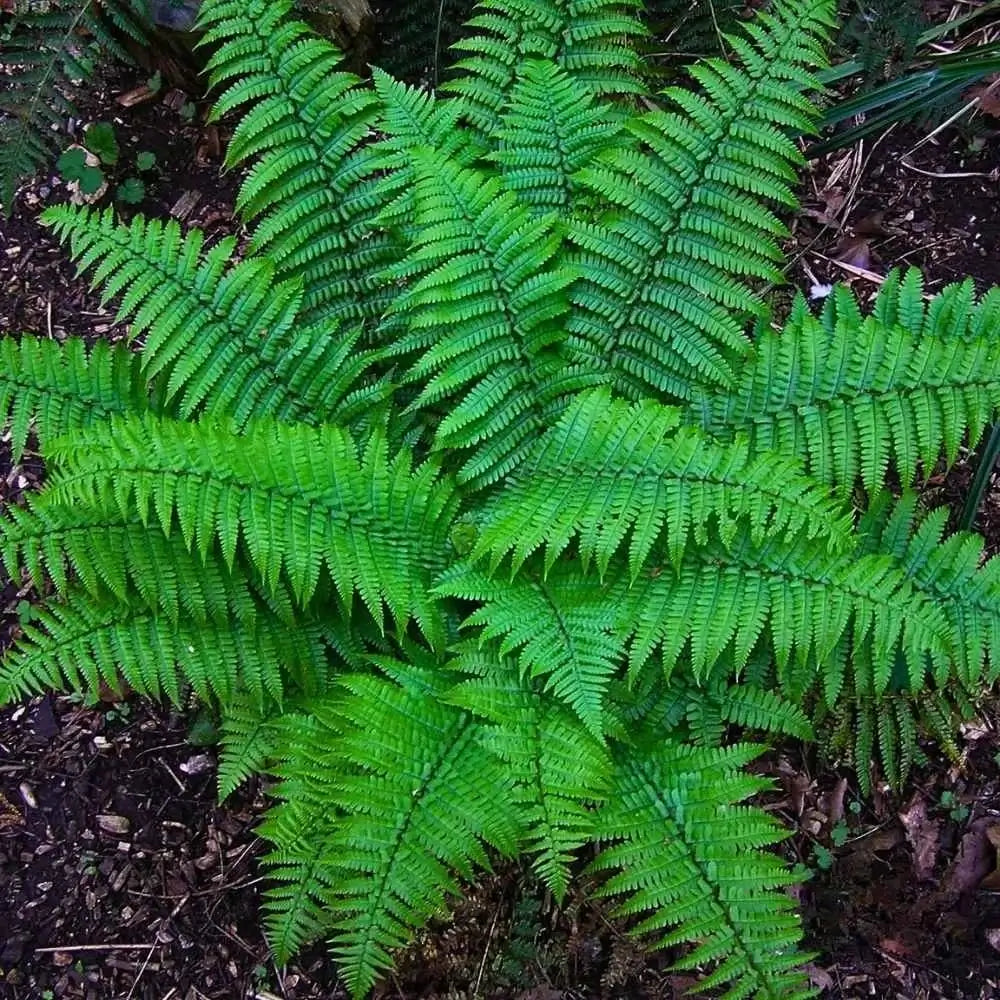
Native fern identification comes down to three clues: the outline of the frond, how many times it is cut into leaflets, and where the spore dots (sori) sit underneath. This guide charts 16 common ferns of the eastern United States with botanical names, height, USDA hardiness zones and the single feature that names each one.
Native Fern Identification Chart: 16 Eastern U.S. Ferns
Use this chart in the woods or in your own shade garden. Read across a row to match a fern you have found, or scan the "Key ID clues" column for the one feature that stands out. Heights are mature plant heights and zones are USDA cold-hardiness zones from the extension sources listed at the end of this guide.
| Fern | Botanical name | Height | Frond division | Key ID clues | Where it grows | USDA zones |
|---|---|---|---|---|---|---|
| Christmas fern | Polystichum acrostichoides | 8–16 in | Once-cut (pinnate) | Glossy leaflets with bristle-toothed edges; spore-bearing leaflets smaller and narrower; round sori in rows | Moist woods, shady slopes, rocky banks | 3–10 |
| Cinnamon fern | Osmundastrum cinnamomeum (syn. Osmunda cinnamomea) | 2–5 ft | Pinnate-pinnatifid | Separate cinnamon-brown spore fronds that wither by midsummer; fiddleheads covered in silvery hairs | Wet acidic soil, bogs, stream banks | 3–10 |
| Interrupted fern | Osmunda claytoniana | 2–4 ft | Pinnate-pinnatifid | Grape-like spore leaflets in the middle of the frond, green leaflets above and below | Damp woods, cool higher elevations | 3–7 |
| Royal fern | Osmunda regalis | 2–4 ft (to 6 ft) | Bipinnate | Broad triangular fronds; spore-bearing parts at the tips turn tawny brown; smooth straw-colored stalk | Wet woods, pond and lake edges | 3–9 |
| Ostrich fern | Matteuccia struthiopteris | 2–6 ft | Once-cut, deeply lobed | Vase shape; fronds taper at both ends; stiff brown feather-like spore fronds persist all winter | Cool, moist streambanks | 3–7 |
| Sensitive fern | Onoclea sensibilis | 10–24 in | Pinnatifid | Broad leaflets with smooth, wavy edges set opposite; bead-like spore stalks in late summer | Wet meadows, ditches, pond margins | 2–10 |
| Netted chain fern | Woodwardia areolata | 12–28 in | Pinnatifid | Netted veins and finely toothed, alternate leaflets; chain-like rows of sori | Swampy woods, stream edges | 5–9 |
| Southern lady fern | Athyrium asplenioides | 20–30 in | Finely divided | Lacy fronds widest near the base; reddish or yellow-green stalks that snap easily | Moist woods, stream banks | 4–10 |
| Hay-scented fern | Dennstaedtia punctilobula | 15–24 in | Bipinnate to bipinnate-pinnatifid | Soft yellow-green fronds smell like new-mown hay when crushed; cup-shaped sori at leaflet edges | Woodland edges, hillsides, open shade | 3–8 |
| New York fern | Thelypteris noveboracensis | 12–24 in | Pinnate-pinnatifid | Yellow-green fronds taper at both ends, lowest leaflets very small; small round sori near edges | Moist floodplains, partial sun to shade | 4–8 |
| Northern maidenhair fern | Adiantum pedatum | 1–2 ft | Fan-shaped (palmate) | Stalk forks into a flat, fan-like whorl of delicate leaflets; oblong sori on leaflet margins | Shaded slopes, rich moist soil | 2–8 |
| Walking fern | Asplenium rhizophyllum | 2–12 in | Simple (uncut) | Narrow triangular evergreen leaves with long tips that root where they touch moss | Shaded limestone rocks, mossy boulders | 4–8 |
| Ebony spleenwort | Asplenium platyneuron | 10–18 in | Pinnate | Erect fertile fronds above shorter, spreading evergreen fronds; dark reddish-brown to black stalk | Open woods, rocky banks, clay slopes | 4–8 |
| Marginal wood fern | Dryopteris marginalis | 16–24 in | Bipinnate-pinnatifid | Leathery blue-green evergreen fronds; round sori sit right on the leaflet edges | Rocky wooded slopes and ledges | 2–7 |
| Broad beech fern | Phegopteris hexagonoptera | 12–26 in | Bipinnatifid | Triangular frond widest at the base; winged stalk joins the lowest leaflets | Moist, rich woods and shady slopes | 4–9 |
| Resurrection fern | Pleopeltis polypodioides | 3–6 in | Once-cut | Curls up and looks dry in drought, then greens again after rain; grows on tree limbs and logs | Tree trunks, rocks, old logs | 6–10 |
Want the short version? We also have a one-page infographic of the 12 ferns gardeners ask us about most often, and you are welcome to use the chart with credit (see Share this guide).
What are the parts of a fern you need to know?
You only need six terms to use any fern key. The whole leaf is the frond; its stalk is the stipe (some guides say petiole), and the stalk continues up the middle of the leaf as the rachis. The leafy part is the blade, its leaflets are pinnae, and a pinna that is divided again breaks into pinnules.
- Rhizome: the underground stem. A long-creeping rhizome makes a spreading colony; a short or upright one makes a tidy clump.
- Fiddlehead (crozier): the coiled young frond that unrolls in spring. Its color and fuzz help with early-season ID, as with cinnamon fern's silvery hairs.
- Sori: clusters of spore cases, usually on the underside of fertile fronds.
- Indusium: a thin flap that covers each sorus in many ferns. Some ferns have none, and some tuck their sori under a rolled leaf edge, called a false indusium.
How do you tell how a fern frond is divided?
Count the cuts from the center stalk outward. A simple frond is not divided at all, like walking fern. A pinnatifid frond is deeply lobed but the lobes stay joined near the rachis, as in sensitive fern.
- Pinnate (once-cut): leaflets fully separate along the rachis. Christmas fern and ebony spleenwort are good examples.
- Pinnate-pinnatifid: separate leaflets that are each deeply lobed. Cinnamon, interrupted and New York ferns follow this pattern.
- Bipinnate (twice-cut): each leaflet is split again into pinnules, giving royal fern and hay-scented fern their open, airy look.
- Bipinnate-pinnatifid or tripinnate: three levels of cutting produce the lacy texture of marginal wood fern and the fancy wood ferns.
Fan-shaped fronds are their own category. On northern maidenhair fern the stalk forks in two and each branch curves outward, making a flat, fan-like whorl you will not mistake for anything else.
Where are the spores on a fern, and why do they matter?
Turn a frond over in summer and look for the sori; their shape and placement are among the most reliable fern ID features. Botanists use spore-case structure to sort ferns into families, and gardeners can use the visible patterns.
Round sori with kidney-shaped covers
Wood ferns in the genus Dryopteris carry round sori under kidney-shaped indusia. On marginal wood fern they sit right at the leaflet edges, which gives the plant its common name.
Round sori with no cover
Rock polypody and broad beech fern both show bare, round sori with no indusium. On rock polypody they line up in neat rows on each side of the leaflet midvein.
Long, linear sori
Spleenworts and chain ferns have stretched-out sori. Netted chain fern lines its sori up like links of a broken chain along the leaflet veins, and walking fern scatters short linear sori in a herringbone pattern.
Sori under a rolled leaf edge
Maidenhair ferns fold the leaflet margin over the spores as a false indusium, so you see oblong flaps along the edges instead of dots.
Separate fertile fronds
Some ferns are dimorphic, meaning the spore-bearing fronds look nothing like the green ones. Cinnamon, ostrich and sensitive ferns all send up distinct fertile stalks, and interrupted fern places its spore leaflets in the middle of an otherwise green frond.
Which native ferns are easy to confuse?
A few pairs trip up almost everyone, but each has one clear tell. Here are the look-alikes we hear about most from customers.
- Ostrich fern vs. cinnamon fern: both grow in tall vases in moist ground. Ostrich fern's fronds narrow at both the top and the bottom, and its brown, feather-like spore fronds stand through winter. Cinnamon fern's spore fronds wither by midsummer. Compare the giant ostrich fern with the cinnamon fern side by side.
- Sensitive fern vs. netted chain fern: sensitive fern has smooth, wavy leaflet edges set opposite each other; netted chain fern has tiny teeth and alternate leaflets.
- Interrupted fern vs. cinnamon fern: before spores appear they look alike. Once fertile, interrupted fern shows a gap of brown spore leaflets mid-frond, while cinnamon fern's spores are on separate stalks.
- New York fern vs. hay-scented fern: both are soft and yellow-green. New York fern tapers at both ends; hay-scented fern is lacier and smells like hay when crushed.
- Walking fern vs. other spleenworts: walking fern's leaves are uncut and arrow-like, while ebony spleenwort and its relatives have rows of separate leaflets.
Which native ferns are evergreen?
Christmas fern, marginal wood fern, walking fern, ebony spleenwort, rock polypody and resurrection fern keep green fronds into winter. That makes winter one of the easiest seasons to identify them, because deciduous ferns have died back to the ground.
Early New England settlers used Christmas fern for holiday decorating, which explains the name. For a full shade planting that stays green year-round, browse our shade ferns, and read more in why native ferns grow best in your garden.
Where do native ferns grow?
Habitat narrows the list fast. Nearly all ferns prefer filtered shade, soil rich in organic matter and steady moisture, but each species has a favorite niche.
- Wet ground and pond edges: cinnamon fern, royal fern, sensitive fern, netted chain fern and New York fern.
- Rocks and ledges: walking fern on shaded limestone, marginal wood fern with its roots tucked under a rock, rock polypody on mossy boulders, and resurrection fern on tree limbs.
- Moist woodland floor: Christmas fern, southern lady fern, northern maidenhair and broad beech fern.
- Cool northern and mountain sites: interrupted fern and ostrich fern, both rated to zones 3–7, do best where summers are mild. Our ferns for cold zones collection gathers the hardiest choices.
How do native ferns help wildlife?
Ferns give shelter and nesting material, and some feed caterpillars. Penn State Extension notes that ostrich fern feeds the larvae of many moth species, including an ostrich fern borer moth that uses it as its only food plant, and that deer often leave fawns hidden in fern patches.
The University of Georgia reports that hummingbirds collect the soft down from cinnamon fern stalks to line their nests. Deer tend to pass over hay-scented fern and ostrich fern, which makes them useful in woodland gardens with heavy browsing. If you plant for butterflies and moths, pair ferns with the host plants in our butterfly host plant chart.
How do you choose native ferns for your garden?
Match the fern to your site rather than the other way around. Check your USDA zone in the chart, then match light and moisture to the "Where it grows" column.
- Dry shade under trees: Christmas fern and marginal wood fern are the most forgiving.
- Fast cover for large areas: hay-scented fern and New York fern spread quickly by creeping rhizomes, so give them room.
- A showpiece: maidenhair fern for fine texture, or royal fern beside water.
- Rock gardens: walking fern on mossy, shaded stone.
- A quick start: the hardy fern trio or our full fern collection.
For smaller spaces, see our list of top small ferns for shade, and for design ideas read TN Nursery's fern favorites and five native fern uses and benefits. Newly planted ferns need regular watering while roots establish, which can take up to two years.
How we made this guide
We built the chart from extension and government sources, not from memory. Heights, zones, frond division and identifying features for 14 species come from the University of Georgia Cooperative Extension bulletin Native Plants for Georgia, Part II: Ferns (Bulletin 987-2). Ostrich fern details come from Penn State Extension, walking fern details from the North Carolina Extension Gardener Plant Toolbox, and the fern-part and sori terminology from the USDA Forest Service. Where sources used older botanical names, we list the current name with the older one in parentheses.
TN Nursery is a family-owned, third-generation nursery in Altamont, Tennessee, founded by Roscoe Tate in 1959. Over more than 65 years on our 170 acres we have supplied plants to major U.S. landmarks, including the Washington Monument and Arlington National Cemetery. We grow about 2 million pawpaw trees a year, and our team answers fern questions from gardeners every season; this guide is the reference we wished we could hand them.
Reviewed by the TN Nursery growing team on November 23, 2026.
Share this guide
Teachers, bloggers, master gardener programs, scout leaders and native plant groups are welcome to use this fern identification chart and its infographic in lessons, handouts and articles. We only ask for a credit to TN Nursery and a link back to this page: https://tnnursery.net/blogs/garden-blog/native-fern-identification-guide. If you would like a print-ready copy of the infographic, contact us and we will send one.
Native Fern Identification FAQ
What is the easiest way to identify a fern?
Start with three features: the overall frond shape, how many times the frond is cut into leaflets, and where the spores sit. Those three clues separate most common eastern ferns in a few minutes.
Which native ferns stay green all winter?
In this guide, Christmas fern, marginal wood fern, walking fern, ebony spleenwort, rock polypody and resurrection fern keep evergreen fronds through winter. Ostrich fern is the opposite case: its green fronds die back, but its brown spore fronds stand all winter.
How can I tell ostrich fern from cinnamon fern?
Ostrich fern forms a tall vase of fronds that taper at both ends, with stiff brown feather-like spore fronds that persist through winter. Cinnamon fern sends up separate cinnamon-brown spore fronds early in the season that wither by midsummer, and its fiddleheads are wrapped in silvery hairs.
How do I tell sensitive fern from netted chain fern?
Sensitive fern leaflets have smooth, wavy edges and sit opposite each other along the stalk. Netted chain fern leaflets have tiny teeth along the edges and tend to alternate.
What are the brown dots on the back of fern leaves?
They are sori, clusters of spore cases. Their shape and position, and whether a thin cover called an indusium protects them, are among the most reliable fern identification features.
Which native ferns grow in wet soil?
Cinnamon fern and royal fern grow well in wet, acidic soil at pond and stream edges, and sensitive fern, New York fern and netted chain fern also handle moist to wet ground.


