
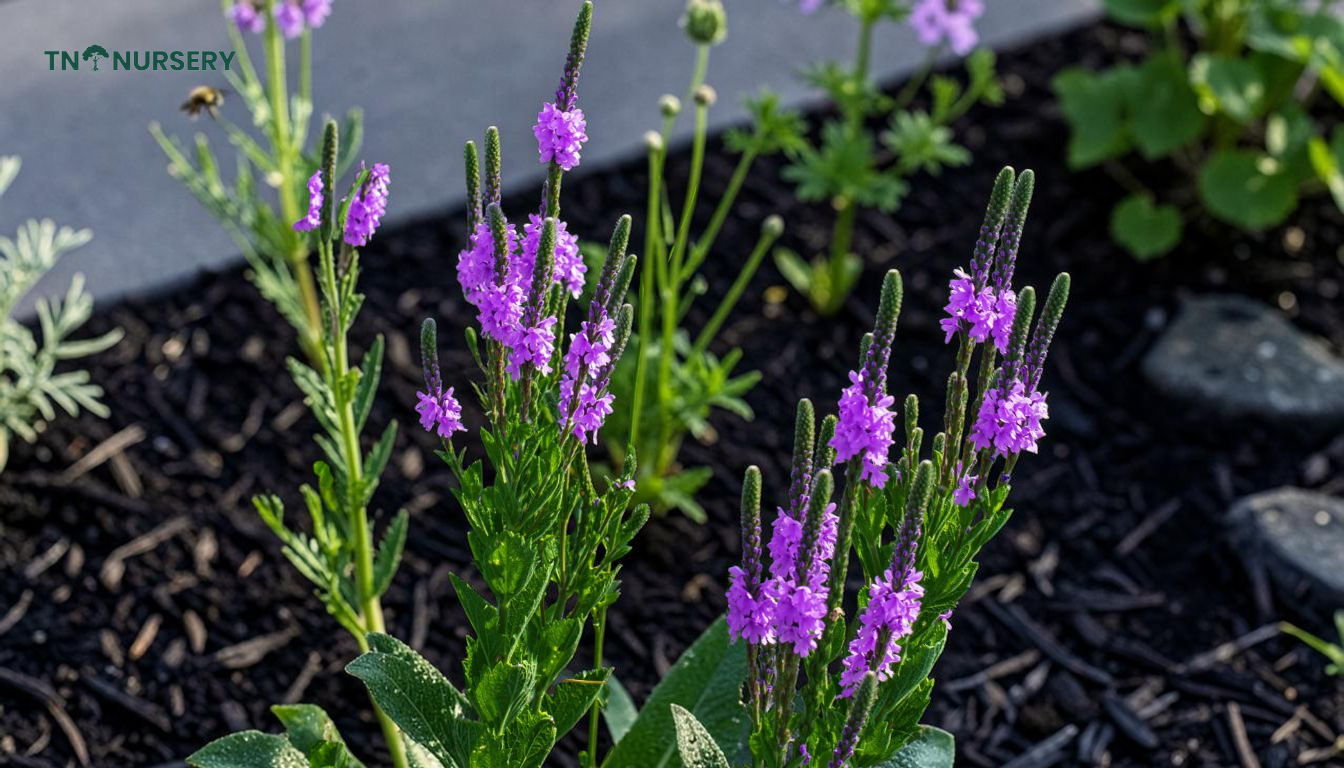
Blue Vervain for Rain Garden Plants
Plant Blue Vervain for tall purple spikes, moist-border color, and steady pollinator traffic. It grows in zones 3-9. Keep in mind, it prefers evenly damp soil over dry beds.
Blue Vervain Brings Height, Pollinators, and Color to Damp Garden Spaces
- Thrives in moist to wet soil, making it a strong fit for rain gardens and low spots
- Grows in zones 3-9 with full sun to partial shade exposure
- Produces slim blue-violet flower spikes from July to September
- Reaches 2 to 6 feet tall for easy back-border height and movement
- Attracts pollinators and can spread gradually by self-seeding and rhizomes
Our Top Pick for Rain Garden Plants

Blue Vervain for Moist Borders and Pollinator Color
If you need one plant to anchor a damp bed, we’d start with Blue Vervain. It grows in zones 3-8, handles full sun to partial shade, and sends up purple flower spikes that bring vertical color to perennials for pollinators. Keep in mind, it prefers evenly moist soil, so it’s not the best pick for a dry strip by the driveway. In the right spot, though, you’ll get a reliable native planting that fits native plants for butterflies and busy summer gardens.
- Bloom Color: Purple
- Exposure: Full sun to partial shade
- Usage: Pollinator Plant
Rain Garden Plants and Perennials for Pollinators
Build a border that handles damp ground, feeds wildlife, and keeps strong structure through the seasons. We paired trees, shrubs, and flowering plants that fit naturalized spaces where native plant...


Planting Blue Vervain in Moist Beds
If you are building with rain garden plants, start with Blue Vervain where the soil stays evenly damp after rain. We plant it in low spots, moist borders, and the back half of a bed, because its blue-violet flower spikes rise 2 to 6 feet and bring vertical color from July into September.
What are the best rain garden plants to buy?
For a moist, naturalized planting, Blue Vervain earns its place fast. It handles moderate to wet soil, grows in zones 3 to 9, and feeds pollinators with tall purple blooms when summer beds need height.
How we plant Blue Vervain in moist soil
Plant bare roots into loosened soil, then water deeply so the roots settle into the damp ground. Full sun gives the strongest bloom, but partial shade works too if your bed gets at least 4 to 6 hours of light.
Keep the crown level with the soil line. Do not bury it too deep. And if your site dries hard in midsummer, keep in mind this plant is not the best fit there.
Native plants for bees need space for airflow
We give Blue Vervain enough room so the stems dry after rain and air can move between clumps. A spacing of about 18 to 24 inches works well in most borders, especially since it can self-seed and spread by rhizomes over time.
- Best placement: back border, rain garden edge, or moist meadow bed
- Light: full sun to partial shade
- Soil: moderate to wet
- Zones: 3-9
Pairing with taller and fuller companions
For a layered look, place Blue Vervain behind fuller mounds and in front of larger woody structure. We use the upright spikes near Black Haw Viburnum Shrub when we want height, berries, and a looser native backdrop.
In shadier, moisture-holding edges, Solomon's Seal Plant adds arching stems and soft white spring bloom below and beside it. That mix gives you contrast: narrow vertical spikes from vervain, then broader, flowing foliage around the base. It is one of our favorite ways to combine perennials for pollinators with structure that does not look stiff.
"Blue Vervain looks best when it has room to sway a little. Packed too tightly, it loses that easy meadow look."
So if you want native plants for butterflies and a border that settles in with less fuss each year, give Blue Vervain moisture, sun, and breathing room. The result looks planted on purpose, but never forced.
Frequently Asked Questions
Does Blue Vervain work well in rain gardens?
Yes. Our rain garden plants lineup includes Blue Vervain because it handles moderate to wet soil and fits low spots that stay evenly damp. You’ll find it especially useful in rain gardens, moist borders, and naturalized beds where its blue-violet flower spikes rise 2 to 6 feet and bring vertical color from July to September.
What planting zones does Blue Vervain grow in?
We list Blue Vervain for planting zones 3 to 9, so it covers a wide range of climates. That makes it one of our more flexible perennials for pollinator-style planting. If your winters are cold and your site stays moist, this verbena plant usually settles in well.
How much sun and moisture does Blue Vervain need?
Give Blue Vervain full sun to partial shade, with at least 4 to 6 hours of light. Moist soil is the key. It performs best in beds that do not dry out fast. Keep in mind, we would not place it in a hot, dry strip by a driveway unless you can water regularly.
When does Blue Vervain bloom, and what does it look like in the garden?
Blue Vervain blooms from July into September, with slim spear-shaped spikes covered in tiny purple to blue-violet flowers. The stems can show deep red to pink tones, which adds extra contrast. In mixed borders, we use it toward the back because the upright habit reads clearly above shorter native plants and pollinators favorites.
Will Blue Vervain spread too much in a mixed border?
It can spread by self-seeding and rhizomes over time, so yes, it will slowly form colonies. But it is not known for bulldozing nearby plants. That’s why we like it for the best plants for a low-maintenance pollinator border, especially where you want a looser, meadow-style look rather than a tight formal edge.
Can I pair Blue Vervain with other plants from your store?
Yes, but match the site first. In a shady area, our Solomon's Seal Plant fits better because it prefers partial to complete shade and spring moisture. Blue Vervain wants more sun and wetter open ground. So if you are planting one bed, group by light and soil instead of mixing everything by bloom color alone.
How do shipping, returns, and refunds work at TN Nursery?
We ship all items by 3-4 day ground shipping. We do not offer refunds, and we do not accept returns. If there is an issue that qualifies for a reshipment, contact us directly at customerservice@tennesseewholesalenursery.com. You can also reach us by mail at Tennessee Wholesale Nursery, 12847 State Route 108, Altamont TN 37301, United States.
Plant Blue Vervain for Stronger Rain Garden Plants
Ready for spring planting? Our Blue Vervain brings purple bloom spikes, pollinator value, and easy height to moist beds. It grows in zones 3-9 and handles full sun to partial shade. Keep in mind, i...
