
"# Best Perennials to Pair With Fall Foliage: A Complete Planting Guide
The best perennials to plant with fall foliage are either those that bloom in late summer or autumn‚ such as Blanket Flower‚ Butterfly Weed and Red Hot Poker‚ or those that have interesting foliage‚ seed pods and structure after blooming in spring‚ such as Red Trillium‚ Jack-in-the-Pulpit and Wood Poppy․ This can give color‚ from the tree canopy to the ground‚ from September until the first hard frost․
Tennessee gardeners‚ by contrast‚ have the advantage of most of the state falling within USDA zone subdivisions 6b through 8a‚ which gives them a longer fall planting window and allows them to work the soil until November․ In fact‚ fall is often the best time to plant perennials‚ as the roots have time to become established in warm soil and will emerge more strongly the following spring․
Blanket Flower (Gaillardia)
Blanket Flower is one of the few flowering perennials that will still be in bloom when the fall leaf colors of maples and sourwoods arrive․ The red‚ yellow and burnt orange daisy-like flowers are close in color to the foliage color‚ making Blanket Flower a good candidate for planting under autumn foliage trees․ Once established it is a drought tolerant plant preferring full sun and well-drained soil․ Heavy clay soil should be avoided or improved with sand or grit as soil saturation is the only major problem with it․ In Middle and West Tennessee‚ Blanket Flower continues to bloom through mid to late October until frost‚ however deadhead spent blooms through September to promote new buds․
Red Trillium (Trillium erectum)
Red Trillium's flowering period is in April‚ well before autumn․ However‚ it makes a highly effective contribution to an autumn woodland garden by means of the large red berry in the center of the whorl of three leaves after flowering and the bronzing of the leaves․ Under oaks or hickories in a moist‚ humus-rich understorey‚ it distributes a low layer of maroon and rust for a carpet of seasonal change throughout the woodland canopy․ It establishes slowly and two to three years are needed before a planting is close to its full potential but‚ once established‚ maintenance is minimal․
Jack-in-the-Pulpit (Arisaema triphyllum)
The hooded flowers of this plant are seen in the spring as with Trillium․ It is in the autumn it particularly shines‚ however․ Bright red berries grow in a tight cluster on top of a bare stalk‚ standing out like a torch atop the fallen foliage of the forest floor․ It grows well in dappled shade‚ moist fertile woodland soil and a low level of disturbance‚ so if you are planting a shade garden under older trees in a hollow in East Tennessee or Cumberland Plateau bluffs‚ this and Red Trillium would do nicely․ Both go dormant by mid-summer in hot years‚ so be careful to mark their places out so that you don't dig them up in the fall․
Butterfly Weed (Asclepias tuberosa)
Butterfly Weed blooms in fall‚ when the monarch migration is at its height across much of Tennessee‚ typical mid-September to October․ The clusters of orange-red remain intact even through colder nights‚ and stand out fresh and bright among the once green leaves that soon begin to fade to yellow and brown․ The color contrast improves the orange․ It prefers full sun and a poor‚ sandy or rocky soil‚ as it becomes too tall and leggy for its own weight and flops down to the ground․ Established plants have a taproot‚ and tolerate transplanting poorly‚ making careful selection of the final location essential․
Wood Poppy (Stylophorum diphyllum)
Also called Celandine Poppy‚ it features bright yellow flowers and airy blue-green deeply lobed foliage․ The leaves make an attractive ground cover after flowering and turn a soft gold color in the fall․ The fall color blends nicely with brown fallen leaves․ In shaded beds‚ with constant moisture‚ it will self-seed in two to three years‚ becoming a continuous ground-cover․ It's one of the better native alternatives to the highly intrusive Lesser Celandine‚ which it is often confused with due to common name ambiguity․
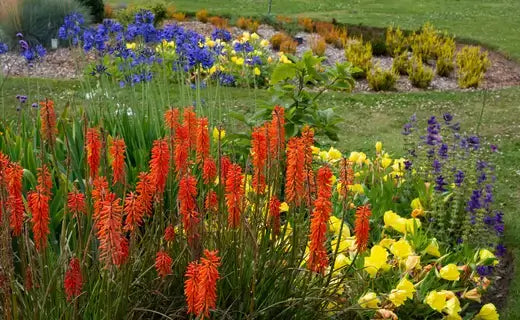
Red Hot Poker (Kniphofia)
The name is perfect for this perennial‚ whose spikes of red‚ orange and yellow tubular blossoms rise above its strappy foliage and look just like torches․ What might not be readily apparent is that it's one of the longest blooming plants on this list‚ flowering from midsummer through the first frosts in zone 7 gardens․ It needs full sun and excellent drainage․ The number one reason Red Hot Poker does not survive in gardens in Tennessee is that it was planted in wet winter soil‚ particularly in the clay-heavy Middle Tennessee․ Raised beds are best․ Allow foliage to stand through winter as protection for the crown‚ and simply cut back in early spring․
Designing With These Perennials
The best fall gardens don't


